Umami as a Way of Life: The Culinary Vision That Defines Ikeda Osushi
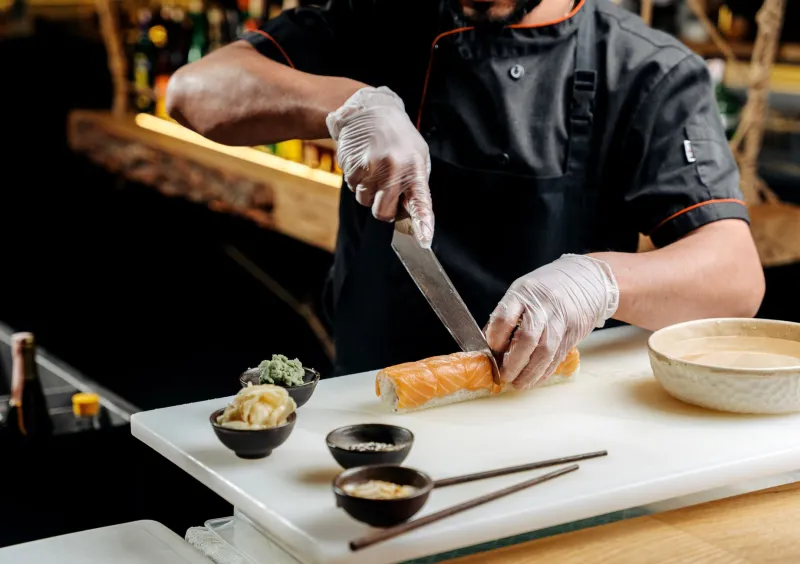
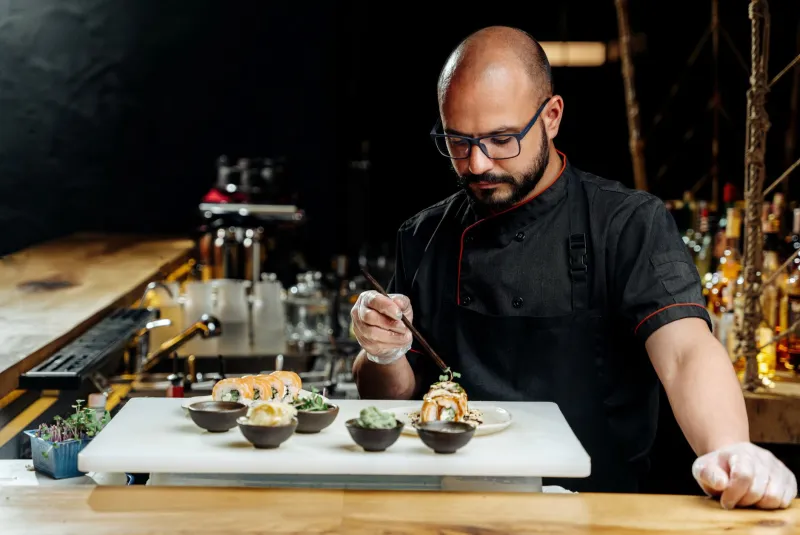
There is a moment, familiar to nearly every regular guest at Ikeda Osushi's counter, when the conversation stops. A piece of aged bluefin arrives — perhaps a chu-toro, rested at precise temperature, pressed with deliberate care — and the room simply goes quiet. It is not the silence of discomfort. It is the silence of recognition. Something in the fish, in the rice, in the barely perceptible bloom of seasoning, registers in the body before the mind can name it. That something is umami, and at Ikeda Osushi, it is the organizing principle behind everything.
For Chef Ikeda, umami has never been a buzzword or a marketing abstraction. It is, as he has described in rare moments of candor with longtime guests, "the honest center of the ingredient." Strip away novelty, strip away spectacle, and what remains is either there or it is not. His entire approach to omakase — the selection, the sequencing, the temperature, the pressure of the hand — is built around coaxing that center into the open without distorting it.
A Foundation Built Abroad, Refined in America
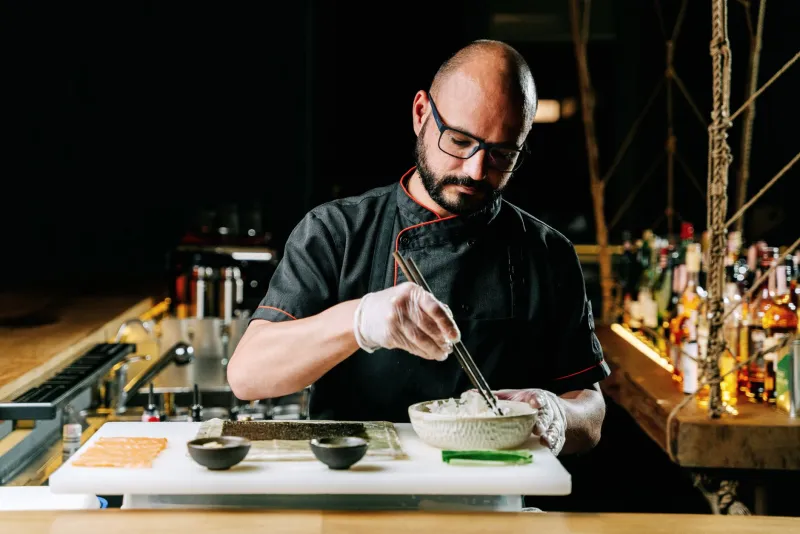
Chef Ikeda's early formation took place in the traditional kitchens of Japan, where the apprenticeship structure demands patience above all else. Years were spent on rice alone — understanding how the vinegar ratio shifts with seasonal humidity, how water mineral content alters the grain's behavior, how a single degree of temperature at the moment of seasoning changes the final texture entirely. This was not considered excessive. It was considered foundational.
The transition to the American market, first in New York and later at the current Ikeda Osushi location, required a recalibration — not of standards, but of communication. American diners in the early years of the chef's stateside career were enthusiastic but often unaccustomed to the pacing and minimalism of authentic omakase. Chef Ikeda chose not to simplify the experience. Instead, he chose to educate through the meal itself, allowing each course to build on the last, trusting that the palate — given the right sequence and the right silence — would arrive at understanding on its own.
"He never talked down to us," recalls one guest who has dined at the counter more than forty times over the past several years. "He just kept serving, and somewhere around the fourth or fifth course, something clicked. You stopped expecting flavors to announce themselves and started listening for them."
The Architecture of a Meal
What distinguishes Chef Ikeda's omakase from many of its contemporaries is the structural rigor behind what appears, on the surface, to be effortless spontaneity. Each evening's menu is not improvised — it is composed, much the way a musician composes for a specific hall and a specific audience. The progression moves from the delicate to the complex, from the lean to the fatty, from the bright to the deeply savory, with deliberate pauses built in through the use of palate-cleansing elements that most guests don't consciously register but would immediately notice if removed.
Central to this architecture is the chef's treatment of umami-rich ingredients. Kombu-cured fish appear early in the sequence, their glutamate levels elevated just enough to prime the palate without overwhelming it. Aged proteins — sometimes rested for days under controlled conditions — arrive at mid-course, their amino acid complexity serving as the meal's dramatic center. Tamago, often dismissed as a throwaway finale at lesser establishments, is here a considered punctuation: slightly sweet, deeply eggy, a gentle resolution to the savory intensity that preceded it.
The rice — always the rice — threads through every piece as a constant. Chef Ikeda has spoken publicly about his belief that sushi rice is not a vehicle for fish but a partner to it. The seasoning is calibrated so that the vinegar recedes as the fish flavor rises, creating what he describes as a "conversation between equals" rather than a hierarchy of ingredients.
Sourcing as an Extension of Philosophy
It would be impossible to discuss Chef Ikeda's approach to umami without addressing where the ingredients originate. The chef maintains relationships with a small, stable network of suppliers — domestic fishermen along the East and West Coasts, importers with direct ties to Japanese fish markets, and a handful of domestic farms producing the specific varieties of rice and sea vegetables that meet his exacting standards.
This is not sourcing as a marketing strategy. It is sourcing as an extension of the same philosophy that governs everything else: the belief that umami cannot be manufactured at the counter if it was not present in the ingredient at the source. A fish handled carelessly after harvest, regardless of its species or origin, has already lost something irretrievable. Chef Ikeda's supplier relationships are built around this understanding, and the conversations he has with his sources are, by his own account, as important as any conversation he has with a guest.
"He once turned down a shipment of incredibly beautiful fish," recalled a member of the front-of-house team, "because something in the handling wasn't right. You couldn't see it. You might not have tasted it immediately. But he knew it wasn't what it should have been. That decision told me everything about how seriously he takes this."
What Guests Carry Home
The measure of a culinary philosophy is not only what happens at the table — it is what guests carry with them afterward. The regulars at Ikeda Osushi describe something that goes beyond satisfaction. They describe a recalibration of expectation, a shift in how they taste not just sushi but food in general. Several have noted that after multiple omakase experiences at the counter, they find themselves more attuned to subtlety, more impatient with unnecessary complexity, more interested in the question of what an ingredient actually tastes like when left to speak for itself.
This is, in many ways, the most significant contribution Chef Ikeda has made to the broader American fine dining conversation. At a moment when the industry frequently rewards novelty and spectacle, his counter stands as a quiet argument for depth over dazzle. Umami, in his hands, becomes not merely a taste sensation but a standard — a way of evaluating whether something is truly what it claims to be.
The Ongoing Work
Chef Ikeda does not speak in terms of legacy. When pressed on what he hopes guests take from the experience, his answer is characteristically direct: he hopes they taste something real. In a dining landscape crowded with distraction, that aspiration is more radical than it sounds. At Ikeda Osushi, the counter is a place where reality — in the form of a perfectly rested piece of fish, a precisely seasoned mound of rice, and the quiet fifth taste that binds them — is the only thing being served.