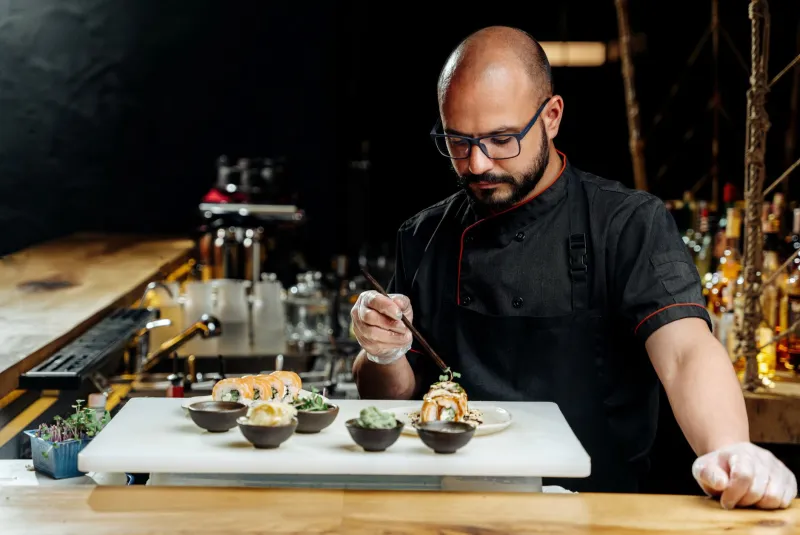
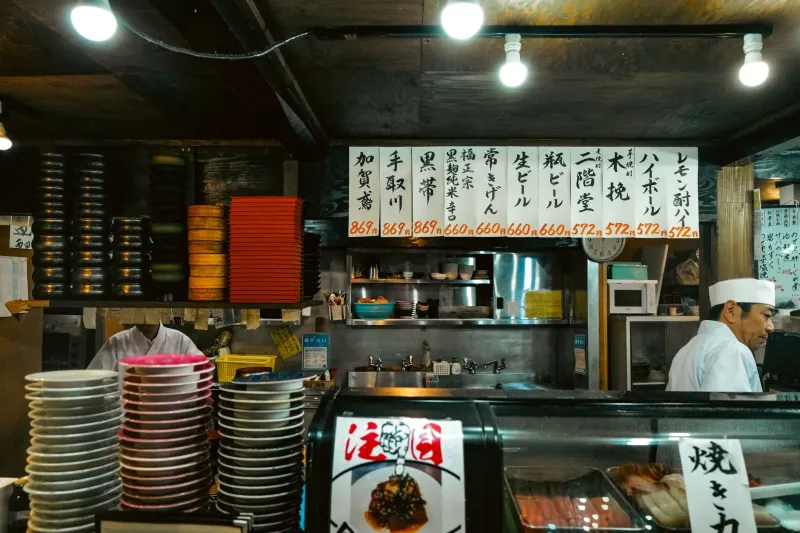
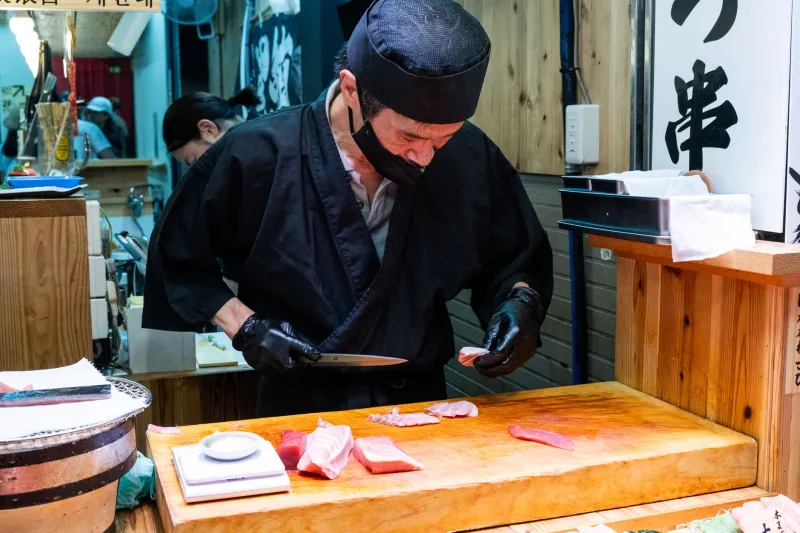
The Unbroken Thread: How Japanese Masters Are Shaping America's Next Generation of Sushi Artisans
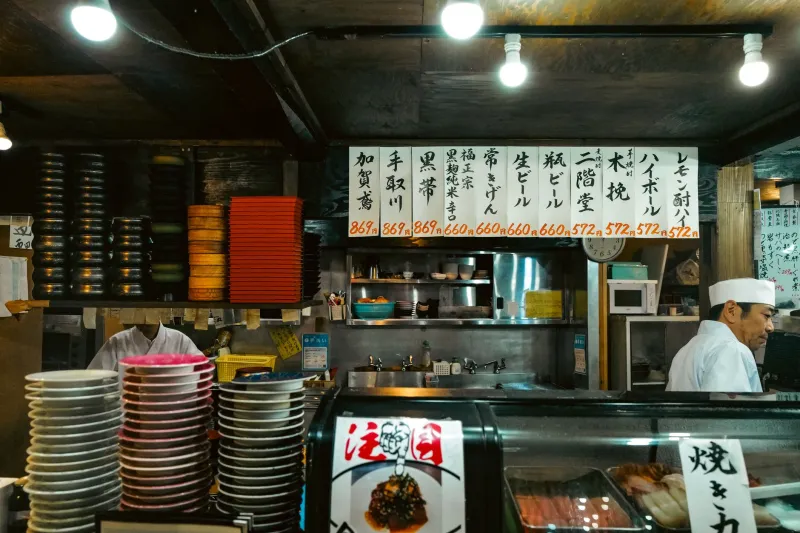
There is a particular moment that many American-trained sushi chefs describe in strikingly similar terms: the instant their Japanese master placed a piece of nigiri before them — not to eat, but to study. The rice temperature, the compression, the ratio of fish to vinegared grain — everything calibrated to a standard that had been refined over decades. That moment, they will tell you, was when they understood that sushi was not a dish to be learned but a discipline to be inhabited.
This kind of instruction does not appear on a culinary school syllabus. It cannot be acquired through a cookbook or a YouTube tutorial. It lives in the space between a master and an apprentice, transmitted through repetition, correction, and silence. And increasingly, it is taking root in American kitchens, carried across the Pacific by a generation of Japanese itamae — master chefs — who chose to extend their lineage beyond Japan's borders.
The Architecture of Apprenticeship
In Japan, the traditional path toward sushi mastery is known as shokunin culture — a philosophy of craft in which the practitioner devotes an entire life to the perfection of a single pursuit. An apprentice in a traditional Edo-style establishment might spend the first two years doing nothing more than washing rice and observing. The hands are educated long before they are trusted.
When Japanese masters began establishing or consulting for serious sushi establishments in the United States — particularly in cities like New York, Los Angeles, and Chicago — they brought this framework with them, even as they adapted it to a different cultural environment. American students, accustomed to faster credentialing and more immediate feedback, were asked to slow down, to surrender ambition to process. Many did not stay. Those who did emerged transformed.
The chefs who endured these demanding apprenticeships frequently describe the experience as a reorientation of their relationship with time itself. Mastery, they learned, is not a destination. It is a daily practice of returning to fundamentals with greater attention than the day before.
What Is Being Transmitted
The knowledge passed from a Japanese master to an American apprentice is not simply technical. It encompasses a complete philosophy of hospitality, ingredient reverence, and aesthetic restraint that is difficult to articulate but immediately perceptible at the counter.
On the technical side, a master transmits the precise calibration of shari — the vinegared rice that forms the foundation of nigiri. Rice temperature at the moment of forming, the pressure applied by the palm, the number of folds required to achieve the correct texture without compressing the grains into density — these are not standards that can be written down with full fidelity. They must be felt, corrected, and internalized through thousands of repetitions under watchful eyes.
Equally important is the education in fish — how to read the surface of a piece of aged bluefin, how to identify the precise moment when a fillet of flounder has reached its optimal texture after a period of careful aging, how to cut against and with the grain of different species to produce the correct mouthfeel. This sensory vocabulary, built over years of guided observation, is among the most valuable things a master can offer.
Beyond technique, there is the transmission of ma — the Japanese concept of meaningful negative space. In sushi, this manifests as the discipline of restraint: knowing when a fish needs nothing more than a single stroke of soy, when a garnish would diminish rather than complement, when silence at the counter serves the guest better than conversation. These are lessons that arrive slowly, often without words.
The American Adaptation
One of the most nuanced challenges in this cross-cultural transmission is ingredient availability. Japan's sushi tradition was built around a specific ecosystem of fish, rice varieties, and condiments sourced from a particular geography. American chefs trained by Japanese masters must learn to honor the principles of that tradition while working with what the domestic market provides.
This requires a kind of principled flexibility — the ability to ask, as one might frame it, not "What ingredient substitutes for this?" but "What ingredient, sourced with equivalent rigor, honors the same intention?" American-caught wild king salmon from the Pacific Northwest, dry-aged with Japanese technique, can achieve a depth of flavor that speaks the same language as the tradition it references, even if it speaks with a different accent.
Japanese masters who have trained American chefs often speak of this adaptation not as a compromise but as a natural evolution of the craft. Sushi, after all, has always been responsive to local waters. What matters is the integrity of the process — the commitment to sourcing with care, preparing with precision, and presenting with humility.
The Responsibility of Inheritance
For those who have received this kind of instruction, the sense of responsibility is considerable. To have learned from a master is to become a steward of something larger than one's individual career. The knowledge is not owned — it is held in trust.
This stewardship expresses itself in the decisions these chefs make daily: the relationships they cultivate with fishmongers and rice importers, the standards they maintain even when no one is watching, the patience they extend to their own apprentices. The lineage continues not through sentiment but through practice.
At establishments where this tradition is taken seriously, diners can perceive the difference, even if they cannot name it. There is a coherence to the experience — a sense that every element, from the temperature of the room to the sequence of the courses, has been considered in relation to a governing philosophy. That coherence is the signature of inherited mastery.
A Living Tradition on American Soil
The story of Japanese masters shaping American sushi artisans is, at its core, a story about what survives transmission and what transforms in the crossing. The core disciplines — precision, restraint, ingredient reverence, the long view — arrive intact. The expression evolves.
What is emerging in the best American sushi establishments is not an imitation of Japanese tradition but a genuine continuation of it: practitioners who have absorbed the principles deeply enough to apply them with confidence in a new context. They understand not only what their masters did but why — and that understanding is what allows the tradition to remain alive rather than merely preserved.
The thread is unbroken. It simply runs through new hands now, hands trained by those who were trained by those who came before them, each generation adding its own earned knowledge to a lineage that shows no sign of ending.