A New Code of Conduct: How Premier American Sushi Bars Are Reshaping the Art of Counter Dining
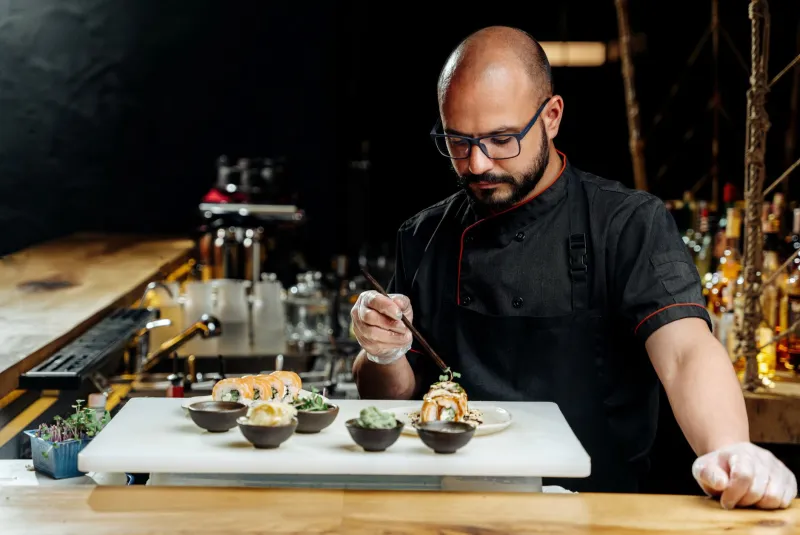
There is a particular stillness that settles over a well-run omakase counter at the height of service. The chef moves with deliberate economy. Each piece of fish is positioned, seasoned, and placed with an attention to detail that borders on ceremonial. For the guest seated across that narrow expanse of hinoki cypress, the invitation is clear: to be present, attentive, and fully engaged with what is unfolding before them.
Yet this environment—so carefully constructed through years of training and thoughtful design—is more fragile than it appears. And across the United States, a growing number of premier sushi establishments are recognizing that preserving it requires more than skilled chefs and exceptional sourcing. It requires guests who understand, and willingly accept, a new standard of conduct.
The Counter as Collaborative Space
Unlike a conventional restaurant table, the omakase counter is not a passive setting. It is a stage where chef and diner enter into a kind of unspoken agreement. The chef commits to delivering a sequence of courses calibrated to the guest's palate, the season's finest ingredients, and the demands of the moment. In return, the guest is asked to bring something equally meaningful: their full attention.
This reciprocal dynamic is rooted in Japanese culinary philosophy, where the act of preparing food is understood as a form of sincere communication. To receive it distracted is, in a very real sense, to leave the conversation half-heard. Elite establishments in cities such as New York, Los Angeles, and San Francisco have begun codifying this understanding into formal and informal policies that gently—but firmly—establish expectations before guests ever take their seats.
The Phone Question
No single issue has prompted more deliberate policy-making among high-end sushi restaurants than the presence of smartphones at the counter. The concern is not merely aesthetic, though the blue glow of a screen does disrupt the ambient warmth that careful lighting design works to achieve. The deeper issue is one of attention and respect.
Several prominent omakase venues now request that phones be silenced and kept off the counter surface entirely. Some go further, asking guests to refrain from photography during service, or to limit it to a single, unhurried moment between courses rather than documenting each nigiri as it arrives. The reasoning is straightforward: when a guest is focused on composing a photograph, they are not tasting. And when they are not tasting, the chef's most nuanced work—the precise seasoning of a piece of aged bluefin, the deliberate temperature of hand-pressed rice—goes unappreciated.
This does not mean the experience must go unshared. Many restaurants are happy to assist guests in capturing a meaningful image at an appropriate moment. The distinction being drawn is between documentation that enhances memory and reflexive recording that displaces presence.
Conversation: When to Speak, When to Listen
One of the more nuanced aspects of counter etiquette involves the rhythm of conversation. The omakase counter is not a silent dining room, nor should it be. Part of its appeal is the opportunity to interact directly with the chef—to ask about a particular fish, to learn something of its provenance, to understand what inspired a specific pairing. These exchanges, when they occur naturally, are among the most rewarding aspects of the format.
The challenge lies in timing. A chef mid-preparation is not in a position to engage at length, and interrupting that focus—however warmly intended—can disrupt both the chef's concentration and the experience of other guests seated nearby. Experienced counter diners learn to read the moment: to ask questions when the chef pauses, to listen when they speak, and to allow silence its proper place in the sequence.
Conversation among fellow guests at the counter also warrants consideration. Omakase seating is intimate by design, and voices that carry too freely can fracture the focused atmosphere that makes the format distinctive. This is not a call for austerity. It is simply an acknowledgment that the counter rewards a certain quality of attentiveness that loud or extended side conversations tend to undermine.
Tipping Culture and Its Complexities
The question of gratuity at omakase establishments sits at an interesting intersection of Japanese hospitality philosophy and American service customs. In Japan, tipping is not practiced and is sometimes regarded as mildly impolite—a suggestion that the hospitality offered required financial incentive rather than arising from genuine care. In the United States, however, tipping remains a meaningful component of service industry compensation, and many American omakase restaurants employ front-of-house staff who depend on it.
Leading establishments have responded to this tension in a variety of ways. Some include a service charge in the prix fixe price and explicitly note that no additional gratuity is expected. Others provide clear guidance in pre-visit communications, helping guests navigate the decision without ambiguity or discomfort. What the best venues share is a commitment to transparency—ensuring that guests can focus on the meal itself rather than calculating percentages as the final course arrives.
For the guest, the most respectful approach is simply to follow the restaurant's stated guidance. Where a service charge is included, honoring that structure acknowledges the establishment's considered position on the matter. Where tipping remains customary, doing so thoughtfully reflects an appreciation for the full team whose work contributed to the evening.
Personal Space and the Shared Counter
Omakase counters are, by their nature, close quarters. Seats are positioned to provide each guest with a direct sightline to the chef's workspace, which often means minimal distance between neighboring diners. This proximity, when handled with mutual awareness, contributes to the communal warmth that distinguishes counter dining from the relative isolation of a private table.
When it is not handled with awareness, it becomes a source of friction. Reaching across a neighbor's space, allowing personal items to encroach on the counter surface, or conducting phone calls that invade the auditory space of those nearby—these behaviors, however unintentional, diminish the experience for everyone present.
The most gracious counter guests are those who hold a light footprint: keeping personal belongings organized, maintaining a conversational register appropriate to the setting, and extending to their neighbors the same consideration they would wish to receive.
Tradition Honored, Not Imposed
It would be a mistake to frame these emerging protocols as restrictive or unwelcoming. The finest omakase establishments in America are not seeking to replicate a rigid Japanese dining environment wholesale. They are doing something more nuanced: selecting those elements of Japanese counter culture that most authentically serve the guest experience, and translating them into a context that American diners can embrace with genuine understanding rather than anxious compliance.
The result is a counter culture that feels neither foreign nor permissive, but purposeful. One where the boundaries in place exist not to discipline guests, but to protect the conditions under which extraordinary sushi—and genuine hospitality—can flourish.
At Ikeda Osushi, this philosophy is woven into every aspect of the counter experience. The standards we uphold are not impositions. They are invitations—to slow down, to pay attention, and to receive, with full presence, the work of a chef who has given everything to the craft.