Steel and Soul: The Sacred Bond Between a Sushi Chef and Their Blade
When a young cook enters a serious Japanese kitchen for the first time, they are rarely handed a knife. They observe. They clean. They learn the weight of patience before they are ever permitted to hold the tool that will define the rest of their professional life. That moment—when a chef finally receives their first blade—is not transactional. It is transformational.
At Ikeda Osushi, we believe that precision begins long before fish meets rice. It begins in the relationship a chef cultivates with their most essential instrument: the Japanese knife.
A Tool Forged in Centuries of Purpose
Japanese knife-making traces its lineage directly to the samurai sword tradition. When the Meiji government banned the carrying of swords in 1876, master swordsmiths redirected their extraordinary metallurgical knowledge toward kitchen cutlery. The result was a category of blade unlike anything else in the culinary world—single-beveled, extraordinarily thin, and capable of cuts so clean they preserve the cellular integrity of delicate fish flesh.
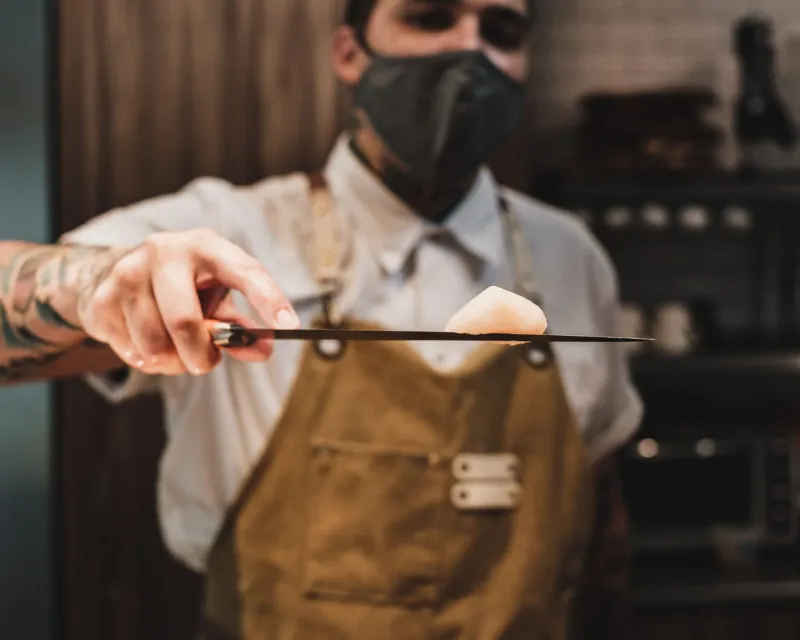
The most revered knives in sushi preparation include the yanagiba, a long, slender blade designed for drawing cuts through fish; the deba, a heavier cleaver used to break down whole fish with authority; and the usuba, employed for precise vegetable work. Each serves a distinct purpose, and a serious sushi chef will spend years learning to coax the full potential from each one.
Artisan knife makers in cities like Sakai and Seki in Japan still produce these blades using techniques passed down through generations. High-carbon steel, known as hagane, is layered and folded with softer iron in a process that creates a blade of exceptional sharpness and controlled flexibility. The edge geometry on a single-bevel knife requires a fundamentally different sharpening approach than Western knives—one that demands consistent practice and intimate familiarity with each blade's individual character.
The Chef's First Blade
In traditional Japanese culinary culture, a chef's knife is not issued by the restaurant. It is purchased personally, often at considerable financial sacrifice, and it belongs to the chef alone. This ownership is not merely logistical—it is philosophical. The blade becomes an extension of the chef's own hands, shaped over time by their grip, their pressure, and the thousands of hours they spend honing its edge.
Senior chefs often recount how their first serious knife felt foreign and unwieldy for months before it began to feel natural. The process of adapting to a blade—and allowing the blade to adapt to you—is considered part of the training itself. As one knife artisan from Sakai explained in a recent exchange with our editorial team, "A knife that has been used well for ten years tells you who the chef is. The wear pattern on the spine, the evenness of the bevel—these things do not lie."
For American diners accustomed to the idea of kitchen tools as interchangeable commodities, this perspective can be genuinely revelatory. The sushi chef preparing your omakase course tonight may be working with a blade they have sharpened by hand every single day for fifteen years.
Maintenance as Meditation
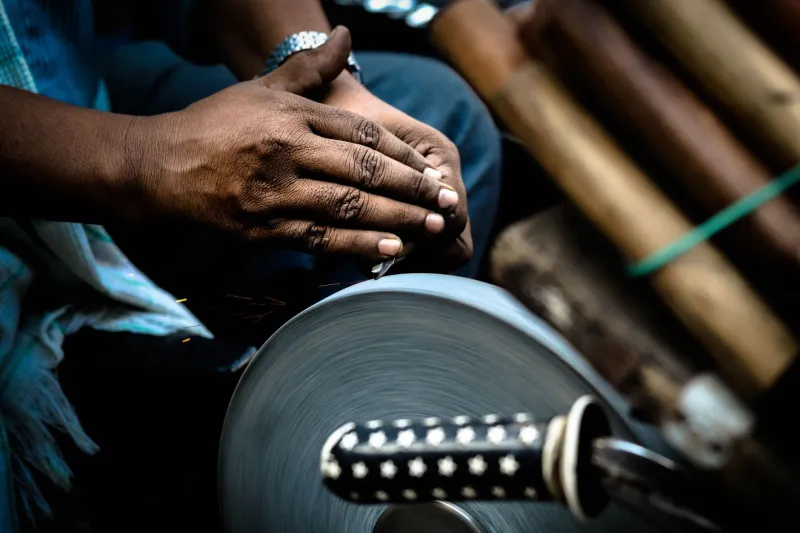
The care of a Japanese knife is not a chore—it is a ritual. Elite sushi chefs typically sharpen their blades on natural whetstones, progressing through multiple grits to achieve an edge refined enough to glide through a piece of otoro without compressing the delicate fat structure within. This process can take thirty minutes or more each day, and many chefs regard it as a form of focused preparation—a mental and physical calibration before service begins.
The sharpening stone itself carries significance. Natural toishi stones, quarried from specific regions of Japan, are prized for their ability to produce a refined, almost polished edge that synthetic stones cannot fully replicate. Some of these stones are no longer in production, making them collectors' items in their own right. A chef's whetstone collection often tells as nuanced a story as their knife collection.
Beyond daily sharpening, knives require periodic professional thinning as the blade wears down over years of use. This work is typically entrusted to a specialist—a toishi-ya, or stone-polishing craftsman—whose skill determines whether a blade is restored to its original geometry or subtly altered. The best chefs maintain relationships with specific craftsmen across their entire careers.
Inheritance and Legacy
Perhaps the most profound dimension of the knife tradition in Japanese cuisine is the act of passing a blade from one generation to the next. When a master chef retires or acknowledges a student's exceptional growth, the gift of a personal knife carries immense symbolic weight. It represents an endorsement of character as much as skill—a declaration that the recipient has demonstrated the discipline and reverence the blade demands.
In some kitchens, knives that have been passed down through multiple chefs are treated with near-reverential care. The blade may have been thinned and sharpened hundreds of times, its profile slightly altered from its original form, yet it remains a living artifact of the lineage it has traveled through.
At Ikeda Osushi, we honor this tradition by ensuring that every chef on our team works exclusively with their own personally selected blades, maintained to the standards their training demands. When you watch our chefs prepare each course, you are witnessing not only technical mastery but the accumulated weight of a tradition that stretches back centuries—expressed in every clean, confident stroke of steel.
The knife, in the end, is not merely a tool. It is a record of a life spent in pursuit of precision.