The Silent Variables Behind Every Perfect Bowl of Sushi Rice
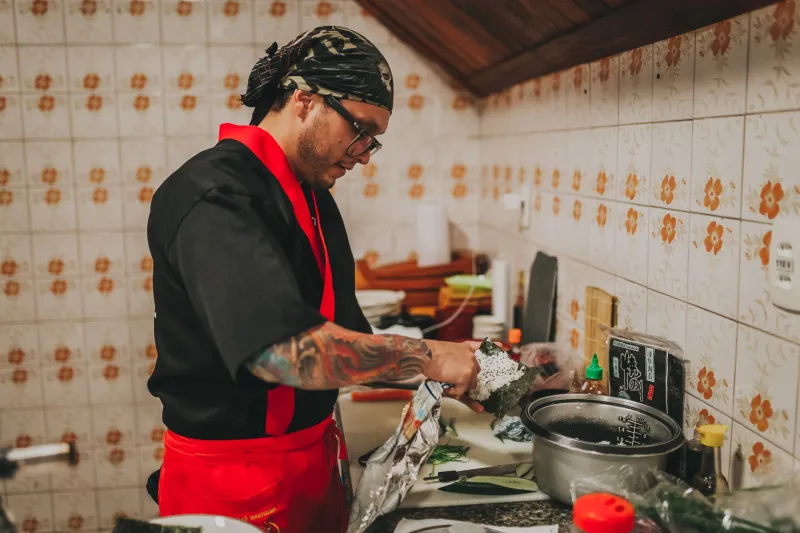
Ask most diners what makes sushi rice exceptional, and the answer is almost always the same: temperature. Keep it warm enough, they say, and the rest follows naturally. At Ikeda Osushi, that assumption is respectfully set aside. Temperature is a factor, certainly, but it occupies a far smaller role than the variables that rarely earn a mention—water quality, vinegar composition, the precise timing of seasoning, and the disciplined motion of the hand during mixing.
These are the details that separate a bowl of rice that merely holds together from one that commands attention on its own terms.
Water as the First Ingredient
Before a single grain of Koshihikari rice meets heat, it encounters water—and water is not a neutral medium. In many American cities, municipal tap water carries measurable concentrations of chlorine and mineral compounds that interfere with the delicate starch structures of short-grain rice. The result is a cooked grain with subtly altered texture: slightly gummy where it should be distinct, or resistant where it should yield.
At Ikeda, water undergoes filtration calibrated specifically to the rice variety in use. The goal is not simply to remove impurities, but to achieve a mineral balance that allows the grain to absorb moisture evenly during the washing and soaking phases. Washing—known in Japanese culinary tradition as togu—is itself a deliberate process. The pressure applied, the number of rinses, and the final clarity of the rinse water all carry consequence. Rush this step, and residual surface starch clouds the final texture. Linger too long, and the grain begins to shed structural integrity before it ever reaches the pot.
The soaking period that follows is equally intentional. Thirty minutes is a common guideline in home cooking, but at a professional level, soaking duration is adjusted according to the humidity in the kitchen, the age of the rice, and the time of year. Older rice, having lost some of its natural moisture during storage, requires a longer soak. These are not arbitrary preferences—they are responses to the grain's actual condition on any given day.
The Architecture of Sushi Vinegar
Once the rice is cooked, the seasoning phase begins, and this is where the philosophy of Ikeda's kitchen becomes most apparent. The sushizu—the seasoned vinegar mixture folded into the cooked rice—is not a fixed formula applied uniformly across all preparations. It is a composition that shifts in response to the fish being served, the season, and the particular flavor profile the chef intends to create.
Rice vinegar forms the foundation, but its sharpness must be tempered by sugar and salt in proportions that reflect nuance rather than convention. A ratio weighted too heavily toward vinegar produces a rice that competes with delicate white fish rather than complementing it. Excess sugar mutes the clean acidity that allows richer cuts—fatty tuna, yellowtail, salmon—to register fully against the palate. Salt, often underestimated, functions not merely as a flavor agent but as a structural one: it tightens the surface of each grain, preserving the cohesion that allows a piece of nigiri to travel intact from hand to plate to mouth.
At Ikeda, the vinegar blend is prepared in-house, adjusted seasonally, and never treated as a background element. It is understood as an active participant in every bite.
Timing and the Window of Transformation
The moment freshly cooked rice is transferred to the hangiri—the traditional wooden mixing vessel—a window opens. That window is narrow, and what happens within it determines whether the finished rice achieves the ideal balance of moisture retention and surface gloss.
The wooden vessel is not decorative. Cypress or cedar absorbs excess moisture from the rice as seasoning is applied, preventing the grains from becoming waterlogged while the vinegar is incorporated. Stainless steel or plastic containers, common in high-volume kitchens, do not offer this function. The choice of vessel is a technical decision with a measurable outcome.
Folding the vinegar into the rice—rather than stirring—is a motion that demands both speed and restraint. The goal is to coat each grain without crushing it, to distribute seasoning evenly without overworking the starch. Too few passes and the flavor remains uneven; too many and the texture collapses into something dense and heavy.
The Fan and the Hand
Perhaps the most visually striking element of professional sushi rice preparation is the use of a fan during the mixing process. This is not theater. As vinegar is folded through the rice, fanning accelerates the evaporation of excess moisture while cooling the grains at a controlled rate. The result is a surface sheen—the hallmark of properly prepared shari—that signals correct moisture balance.
The hand that mixes is equally important. Experienced sushi chefs develop a particular sensitivity in their palms and fingers that allows them to gauge the rice's readiness without measurement. They feel the weight of the grain, the way it separates and returns under pressure, the subtle shift from steaming heat to the precise warmth that signals the rice is ready to be shaped. This tactile knowledge is accumulated over years, not weeks, and it is one of the reasons that sushi rice—seemingly the simplest component on the plate—remains one of the most demanding to execute at the highest level.
Why This Matters to the Diner
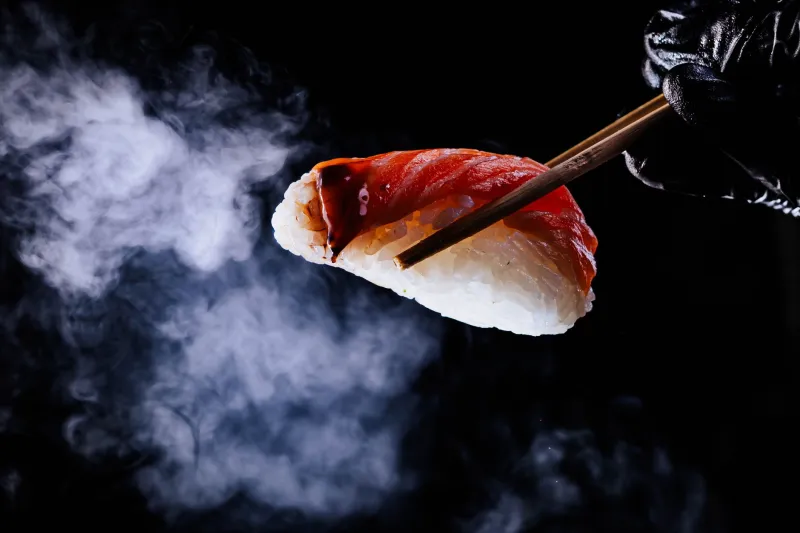
For guests dining at Ikeda Osushi, this context enriches every piece served. The rice beneath a slice of bluefin tuna is not a neutral base—it is a carefully calibrated composition that has been adjusted that morning, in that kitchen, in response to conditions that no written recipe fully anticipates. It carries the water quality of a filtered source, the balance of a seasonally tuned vinegar, the discipline of a properly timed fold, and the judgment of hands trained to recognize readiness without instruments.
When diners understand this, the question of temperature becomes almost beside the point. Temperature is a threshold. Everything discussed here is what lies beyond it.