The Return to Rigor: Why Elite Sushi Chefs in America Are Choosing Tradition Over Trend
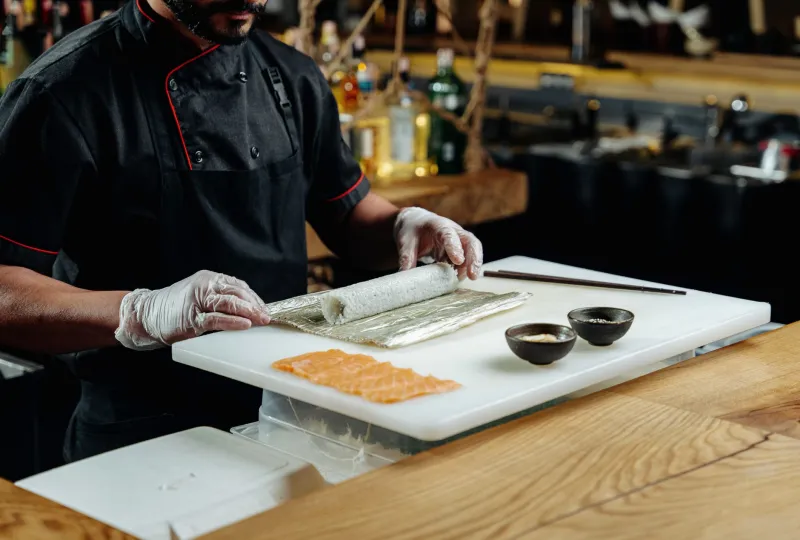
For much of the 1990s and early 2000s, the dominant narrative in American sushi was one of creative expansion. Chefs across the country layered spicy aioli over tuna, tucked cream cheese into rolls, and introduced tempura-fried constructions that bore only a passing resemblance to the Edo-mae traditions from which sushi descended. This was not entirely without merit—it introduced millions of Americans to raw fish in an accessible, unthreatening format. But it also produced a widespread misunderstanding of what serious sushi actually is.
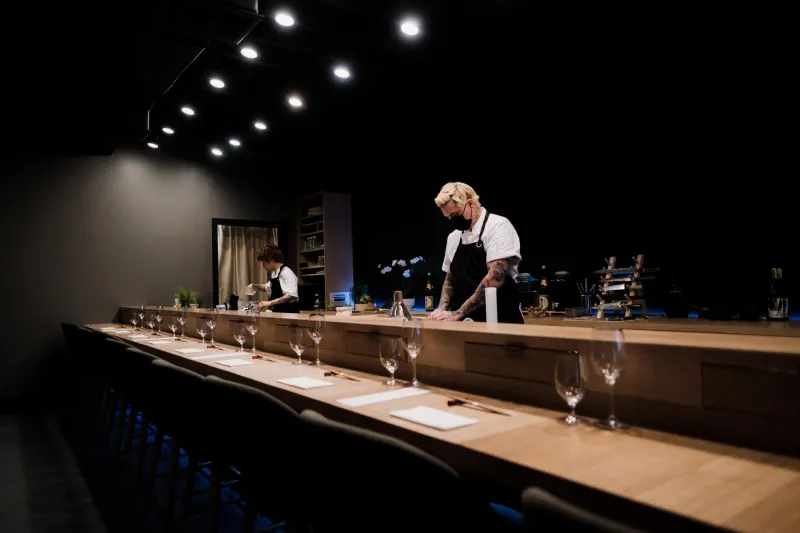
That misunderstanding is now being corrected, methodically and deliberately, by a generation of American sushi chefs who have studied in Japan, trained under demanding masters, and returned to the United States with a different set of priorities. At Ikeda Osushi, this commitment to classical Japanese precision is not a marketing position. It is the organizing principle of everything that happens at the counter.
The Limits of Novelty
Fusion cuisine, at its best, produces genuine creative breakthroughs. At its worst, it uses novelty as a substitute for mastery. In the context of sushi, the problem with the fusion era was not that chefs experimented—experimentation has always been present within Japanese culinary tradition—but that experimentation often preceded the acquisition of foundational skills.
A chef who has not spent years learning to cook rice to the exacting specifications of traditional shari has no reliable basis for departing from those specifications. A chef who has not developed the hand sensitivity required to identify the precise moment when a fish fillet is ready for service cannot compensate for that gap with a creative sauce. The innovations that endure in any culinary tradition are those built on technical fluency, not around it.
This is the critique that serious American sushi chefs are now articulating openly. The conversation has shifted from what can be added to sushi to what must be understood before anything is added at all.
What Japanese Training Actually Demands
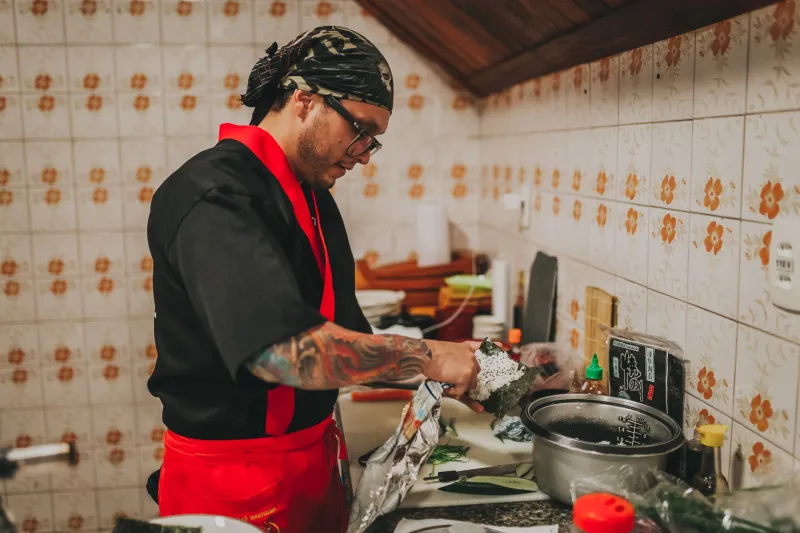
The apprenticeship model that governs traditional Japanese sushi training is, by American standards, almost incomprehensibly rigorous. A chef entering a serious sushiya in Japan may spend the first year or more doing nothing but washing rice, observing, and performing preparatory tasks that seem remote from the act of making sushi. The rice alone—its washing, soaking, cooking, and seasoning—occupies months of concentrated study before a young chef is permitted to handle fish.
This sequencing is not arbitrary. It reflects a philosophy in which each component of sushi is understood as a discipline unto itself, requiring complete attention before integration with other elements. The fish does not compensate for imperfect rice. The rice does not forgive a poorly executed cut. Every element must be correct independently before the sum of those elements can achieve the precision that defines exceptional sushi.
American chefs who have undergone this training—whether in Japan or under Japanese masters in the United States—return with a fundamentally different understanding of what it means to prepare sushi well. For many of them, the experience is described not as limiting but as liberating: once the foundational techniques are internalized, every decision made at the counter becomes more intentional, more grounded, and ultimately more expressive.
At Ikeda Osushi, our chefs have pursued precisely this kind of foundational training. The discipline visible in our kitchen is not performance; it is the residue of years spent learning to do essential things correctly.
Educating the Market Through the Meal Itself
One of the more interesting aspects of the current shift toward classical technique is the role that American diners are playing in sustaining it. There is a meaningful and growing segment of the US dining public that actively seeks out traditional Japanese sushi experiences—guests who have traveled to Japan, read seriously about the cuisine, or simply developed enough palate experience to recognize the difference between technically accomplished sushi and its more casual counterpart.
Restaurants that commit to classical Japanese methods are, in effect, making a wager on this audience. The wager is that enough American diners exist who will value—and pay for—the kind of sushi that takes years to learn to make. The evidence, at this point, suggests the wager is sound.
But education remains essential. Not every guest arrives at a traditional counter with the context needed to fully appreciate what they are experiencing. Part of the work of running a serious sushi restaurant in America is helping guests understand why the rice is seasoned the way it is, why a particular fish is served at a specific temperature, why the chef applies nikiri to certain preparations and not others. These explanations, offered without condescension, transform a meal into an education—and they build the kind of loyal, informed audience that sustains a restaurant committed to quality over novelty.
This educational dimension is one Ikeda Osushi takes seriously. Our staff is trained not only to execute at a high level but to communicate the reasoning behind that execution in terms that are accessible and genuinely interesting to guests.
Authenticity as a Competitive Advantage
There is a commercial argument here that runs parallel to the philosophical one. In a saturated restaurant market, differentiation matters. The proliferation of casual sushi restaurants across the United States—many of them excellent in their own category—has actually created space for establishments that occupy the opposite end of the spectrum. When sushi is everywhere, sushi done with rare precision becomes genuinely distinctive.
Chefs and restaurateurs who commit to classical Japanese technique are not retreating from the market. They are identifying a specific position within it and building toward that position with discipline. The guests who find their way to a counter like Ikeda Osushi's are often guests who have been through the casual tier and are now looking for something that rewards closer attention.
Tradition as Living Practice
It would be a mistake to characterize the movement toward classical Japanese sushi technique as conservative in any static sense. The chefs driving this shift are not nostalgists. They are practitioners who have concluded, through rigorous study, that the accumulated wisdom embedded in traditional Japanese sushi technique represents a higher ceiling than the alternatives—and that reaching that ceiling requires working within the tradition rather than around it.
At Ikeda Osushi, this conviction shapes every aspect of how we operate: how we source fish, how we cook and season rice, how we structure the progression of a meal, and how we train the people who work at our counter. The return to rigor is not a trend. It is a recognition that some things are worth doing with complete seriousness—and that sushi, at its best, is one of them.