The Art of Letting Go: How Omakase Dining Transforms the Way Americans Experience Sushi
There is a particular discomfort that many American diners feel when a menu is not placed before them. The ritual of scanning options, weighing preferences, and arriving at a decision is so deeply embedded in the dining culture of the United States that its absence can feel disorienting — even slightly threatening. Yet at the finest sushi restaurants, that very absence is the point. Omakase, derived from the Japanese phrase meaning "I leave it to you," is not merely a dining format. It is a philosophy, a relationship, and, for those willing to embrace it, a revelation.
The Cultural Distance Between Choice and Trust
American consumer culture prizes autonomy. From customizable coffee orders to build-your-own meal platforms, the prevailing assumption is that more choice produces more satisfaction. Behavioral economists, however, have long complicated this assumption. The psychologist Barry Schwartz, in his landmark work on the paradox of choice, demonstrated that an abundance of options frequently leads not to greater happiness but to decision fatigue, second-guessing, and diminished enjoyment of whatever is ultimately selected.
Omakase sidesteps this paradox entirely. By removing the burden of selection, the format liberates the diner to be fully present — attentive to flavor, texture, and the quiet choreography unfolding behind the counter. What feels like a loss of control is, in practice, a transfer of responsibility to someone far better equipped to exercise it.
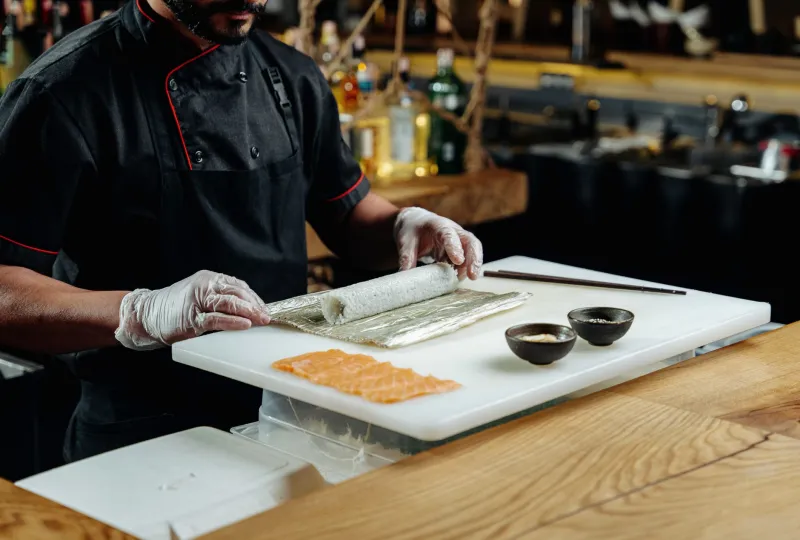
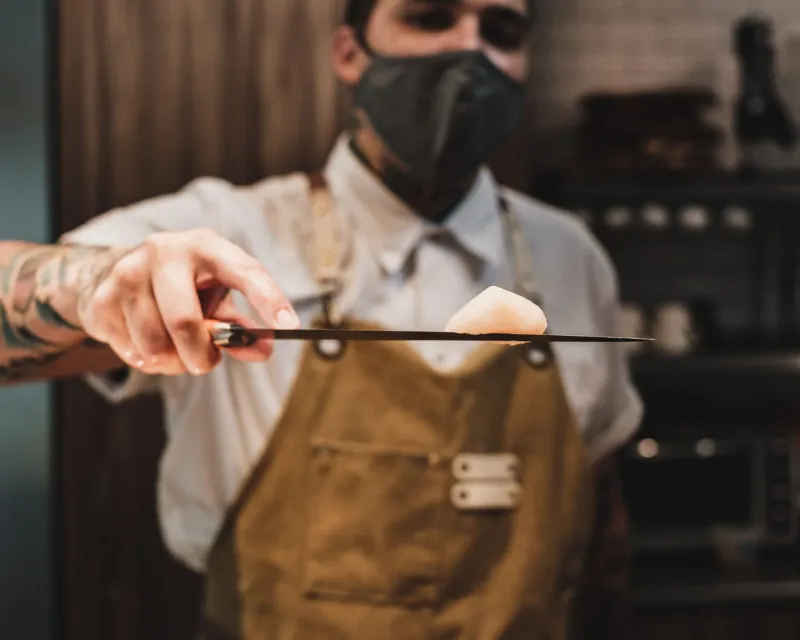
The hesitation many American guests experience before their first omakase meal is understandable. Questions arise naturally: What if I dislike something? Will I be full? Can I indicate preferences? At Ikeda Osushi, these concerns are addressed directly before service begins. A skilled itamae — the Japanese term for a sushi chef who stands before the cutting board — will inquire about dietary restrictions and significant aversions. Beyond that, the meal belongs to the chef.
Sequencing as Craft: The Logic Behind the Order
To the uninitiated, the progression of an omakase meal may appear intuitive or even arbitrary. In reality, the sequence of courses represents some of the most deliberate decision-making in the culinary world. Each piece of nigiri, each small preparation, is positioned with the awareness of what preceded it and what will follow.
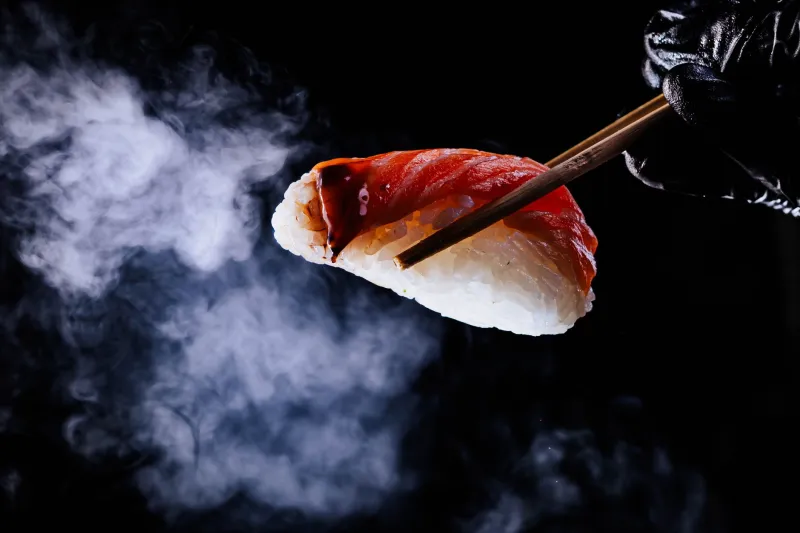
Elite sushi chefs typically begin with lighter, more delicate fish — flounder, sea bream, or young yellowtail — whose subtle flavors would be overwhelmed if served after richer preparations. The palate is treated as a canvas that must be primed before bolder strokes are applied. As the meal progresses, the chef introduces fish with deeper fat content and more pronounced umami: bluefin tuna in its various grades, sea urchin, fatty salmon belly. The final savory courses often include warm or cooked preparations — a small bowl of miso soup, a piece of tamago — that signal a gentle conclusion before the meal closes.
This architecture is not accidental. It mirrors the Japanese aesthetic concept of ma — the meaningful use of space and pause — applied to flavor. Each course creates context for the next. A piece of lean tuna served mid-sequence lands differently than the same piece served at the outset, because the palate has been educated by what came before it.
The Chef-Diner Relationship: A Dialogue Without Words
One of the most misunderstood aspects of omakase is the assumption that it is a one-directional experience — the chef performs, the diner receives. In practice, a skilled itamae reads the table continuously. The pace at which a guest eats, subtle expressions of pleasure or hesitation, the speed with which a glass is emptied — all of these signals inform adjustments in real time.
At the counter, this dialogue becomes even more pronounced. Seated directly before the chef, guests at an omakase bar occupy a position unlike any other in fine dining. They witness the precision of each cut, the deliberate seasoning of each piece, the practiced efficiency of hands that have repeated these movements thousands of times. The intimacy is intentional. It builds trust, and trust is the foundation upon which the entire omakase experience rests.
This is why many devoted omakase guests return to the same chef repeatedly. Over multiple visits, the itamae accumulates knowledge of a guest's preferences, tolerances, and evolving palate. The meal becomes increasingly personalized — not through a printed menu of options, but through the chef's memory and observation. It is a relationship that deepens with time in ways that à la carte dining rarely permits.
Why Surrender Produces Satisfaction
Research in cognitive psychology offers additional insight into why omakase dining so reliably produces high satisfaction. Studies on anticipated versus experienced pleasure consistently show that when individuals are relieved of decision-making responsibility in contexts they find complex or unfamiliar, their enjoyment of the resulting experience increases significantly. The mental energy previously devoted to selection is redirected toward appreciation.
There is also the matter of expectation. When a diner selects their own meal, they arrive at the table with a precise vision of what they will receive. Any deviation — a preparation that differs from imagination, a portion smaller than anticipated — registers as a disappointment. Omakase replaces fixed expectation with open receptivity. Each course arrives as a small discovery, and discovery, by its nature, carries its own pleasure.
Approaching Omakase for the First Time
For guests considering their first omakase experience at Ikeda Osushi, a few practical points may ease the transition. Arrive with genuine curiosity rather than a predetermined list of favorites. Communicate any true dietary restrictions clearly at the outset, but resist the impulse to over-specify preferences — doing so narrows the chef's creative range and, paradoxically, often produces a less satisfying meal.
Resist also the temptation to photograph each course at length. The temperature and texture of nigiri are integral to its character, and both degrade within moments of preparation. The chef's timing is precise; honoring that timing is itself a form of respect.
Finally, engage with the experience as a conversation. Ask questions between courses. Express genuine reactions. The itamae is not a performer behind glass — they are a skilled professional who has chosen to share their craft directly, and that directness invites authentic exchange.
The Deeper Meaning of Omakase
At its core, omakase is an expression of a value that Japanese culinary culture has long held central: the idea that mastery deserves deference. When a guest says "I leave it to you," they are not abdicating their own discernment. They are acknowledging that the chef's years of training, their daily relationships with suppliers, their intimate knowledge of what is finest on any given evening — all of this constitutes a form of expertise that no menu, however comprehensive, can fully convey.
The American dining landscape is gradually embracing this understanding. As more guests encounter omakase and return from it transformed, the format is earning the trust it has always deserved. At Ikeda Osushi, the invitation remains open: surrender the menu, and discover what sushi, at its highest expression, is truly capable of.