Speaking the Chef's Language: How to Engage at the Omakase Counter Without Breaking the Spell
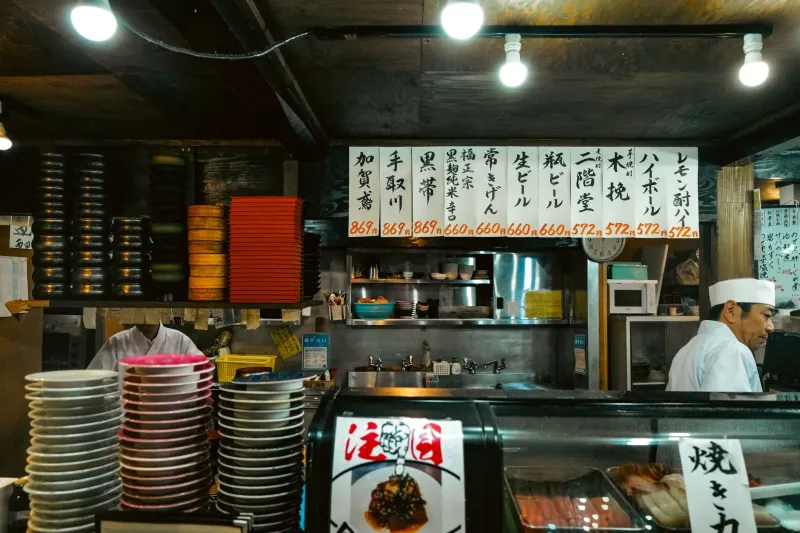
There is a particular silence that settles over an omakase counter just before the chef begins. It is not the silence of formality or restriction. It is the silence of concentration—the same quality of stillness that precedes a musician's first note. For American diners accustomed to menus, options, and the casual back-and-forth of a neighborhood restaurant, this atmosphere can feel opaque, even intimidating. The instinct, understandably, is to say nothing at all.
That instinct, while considerate in spirit, misses something essential. Omakase—literally translated as "I leave it to you"—is not a performance staged for passive observers. It is, at its finest, a dialogue conducted through food, gesture, and occasionally words. The chefs who have spent decades refining their craft are not indifferent to the people sitting before them. They are, in fact, reading their guests constantly: noticing expressions, watching how each piece is received, adjusting the progression accordingly. A diner who understands this dynamic and participates with intelligence does not interrupt the experience. They complete it.
The Difference Between a Question and an Interruption
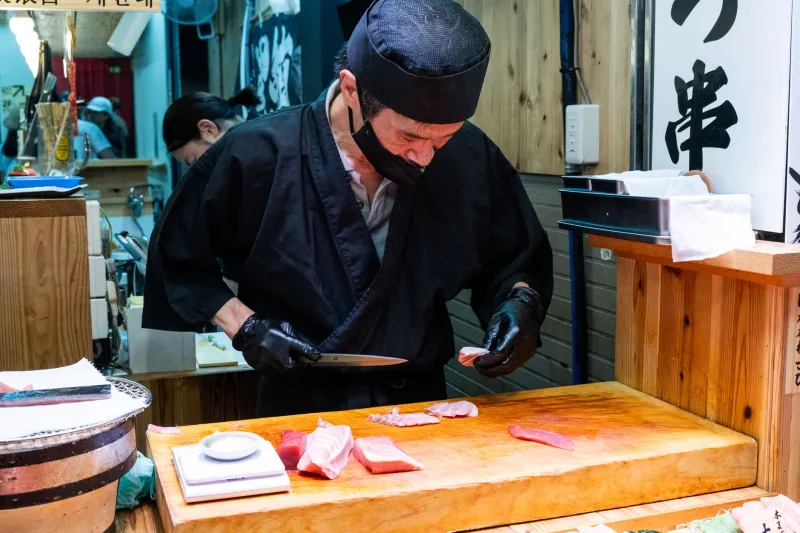
The first thing to understand is timing. At a high-level omakase restaurant, the chef works within a rhythm—a deliberate sequence of preparations, each one building on the last. Asking a question mid-motion, while the chef's hands are shaping rice or applying the final brush of nikiri, is the equivalent of speaking during a musician's phrase. The moment passes. The thought scatters.
The natural pauses are where conversation belongs. These occur most reliably when a piece has just been set before you, before you have lifted it to eat. That brief window—two or three seconds at most—is when a chef is most open to a brief exchange. A simple "What region is this from?" or "Is this aged?" lands cleanly in that space. It signals attentiveness without demanding a lengthy response.
After you have eaten the piece and before the next preparation begins is the second natural opening. This is where more substantive questions find their footing. Chefs often use this moment themselves to offer context—a word about the fish's provenance, a note on the season. When they do, they are extending an invitation. Receive it, and then, if genuine curiosity moves you, build on it.
Questions That Open Doors
Not all questions are equal at the counter. Some close a conversation before it begins; others create the conditions for something memorable.
Questions rooted in genuine observation tend to land best. "I noticed the texture on this one is different from the last—is that a function of how it was cut?" demonstrates that you are paying attention, not merely consuming. Chefs respond to specificity because specificity is the language they speak. They have thought carefully about every variable in that piece of fish. A question that acknowledges those variables signals that you are a worthy interlocutor.
Questions about sourcing consistently open rich conversations. Where a fish was caught, by what method, and at what time of year are matters of deep professional pride for serious sushi chefs. Asking about the origin of a particularly striking piece of tuna or the farm behind an exceptional uni is not pedantic—it is an acknowledgment that the supply chain behind the meal is as considered as the technique applied to it.
Questions about the chef's own preferences are among the most disarming. "Is there a fish you find yourself drawn to this season?" or "What have you been most excited to work with lately?" invite the chef to speak not as a technician explaining a process, but as an individual with tastes and enthusiasms. These moments, when they occur, are often the ones guests remember most vividly.
Reading Receptiveness Without Misreading Reserve
Not every chef wears their openness on the surface. Some of the most accomplished sushi masters in the United States communicate primarily through the food itself, offering minimal verbal commentary and few obvious openings for dialogue. This is not aloofness. It is a different mode of expression, and it deserves to be read accurately rather than pushed against.
The signs of receptiveness are subtle but consistent. Eye contact held a moment longer than necessary. A slight pause after placing a piece, as if awaiting a response. A question offered first—"Have you had this variety before?"—which is always an invitation to continue. When these signals appear, the door is open. When they do not, the most eloquent response is often simply to eat with evident pleasure and let your expression carry what words might interrupt.
It is worth noting that many American diners underestimate the degree to which a chef registers nonverbal feedback. A look of genuine surprise at a flavor. The way a guest pauses before reaching for the next piece. The quality of attention visible in someone's posture. These are all read, all absorbed, and all shape what comes next in the progression.
What Not to Ask—and Why It Matters
Certain questions, however well-intentioned, work against the spirit of the counter. Requests for substitutions mid-omakase—"Could I have something without roe?"—are best communicated before the meal begins, during the brief pre-service exchange about allergies and preferences. Raising them mid-progression disrupts the chef's carefully constructed arc.
Comparisons to other restaurants, framed as questions, tend to land awkwardly. "How does this compare to what they do at [another establishment]?" places the chef in an uncomfortable position and shifts focus away from the meal at hand. The omakase counter is not a forum for competitive assessment. It is its own complete world for the duration of the meal.
Questions that seek validation rather than information—"This is the best, right?" or "You're considered one of the top chefs in the city?"—are well-meaning but create a social dynamic that the chef must manage rather than enjoy. Genuine admiration, expressed simply and without the expectation of a response, is always more graceful.
The Guest as Collaborator
There is a version of omakase dining that is purely transactional: a fixed sum exchanged for a fixed sequence of courses, consumed and concluded. That version exists, and it is not without value. But it is not the version that serious sushi restaurants—or serious diners—are reaching for.
The counter, at its best, is a site of genuine collaboration. The chef brings years of accumulated knowledge, seasonal awareness, and technical precision. The guest brings attention, curiosity, and the willingness to be moved by something unfamiliar. When both parties meet at that level, the meal becomes something that neither could have produced alone.
Asking the right question at the right moment is not a small thing. It is a form of respect—an acknowledgment that what the chef has placed before you is the product of a considered life's work, and that you have arrived prepared to receive it with equivalent seriousness. That posture, more than any particular question, is what transforms a seat at the counter into a conversation worth having.