Flavor by Design: The Fermentation Science Behind Sushi's Most Complex Tastes
There is a particular moment in a well-executed omakase when a single piece of nigiri silences the table. The flavor is not loud. It is not sharp or immediately assertive. It arrives in layers—first a clean oceanic note, then something deeper, almost mineral, and finally a resonance that lingers long after the fish has dissolved. That sensation has a name: umami. And in the hands of a trained sushi chef, it is not a happy accident. It is the result of precise calculation.
At Ikeda Osushi, the philosophy governing every dish rests on a foundational belief: flavor is a discipline, not a gift. The most extraordinary tastes on the menu are the product of fermentation timing, controlled aging, and an intimate understanding of the biochemical processes that transform raw ingredients into something transcendent.
What Umami Actually Is—and Why It Matters
American diners have grown increasingly familiar with the word umami over the past decade, yet its scientific basis remains underappreciated at the table. Identified formally by Japanese chemist Kikunae Ikeda in 1908, umami is the perceptual result of glutamate—an amino acid—binding to specific taste receptors on the tongue. It signals protein richness, biological depth, and nutritional density. In practical terms, it is the quality that makes a dish feel complete rather than merely pleasant.
In sushi specifically, glutamate concentration is not fixed at the moment of harvest. It accumulates. Fish muscle contains inosinate, a nucleotide that breaks down into inosine monophosphate (IMP) and, under the right conditions, contributes to a compounding umami effect when combined with glutamate-rich accompaniments. The chef's task is to manage the rate and conditions of this accumulation with the same care a winemaker applies to fermentation temperature.
The Role of Controlled Aging in Fish
Fresh fish is not always the most flavorful fish. This distinction surprises many American diners accustomed to equating freshness with quality in absolute terms. While absolute freshness remains essential for food safety, a fish harvested this morning and served this afternoon may actually deliver a less nuanced flavor profile than one that has been carefully aged for twenty-four to seventy-two hours under refrigerated, humidity-controlled conditions.
The process—referred to in Japanese culinary tradition as ikejime and post-harvest resting—allows enzymatic activity within the fish tissue to convert proteins into free amino acids, including glutamate. A skilled chef monitors this progression by evaluating the texture of the flesh, the clarity of the fat, and subtle shifts in aroma. At Ikeda Osushi, this evaluation is not left to intuition alone; it is a structured practice built on years of repetition and precise environmental controls.
Certain species respond to aging with particular eloquence. Yellowtail, for instance, develops a buttery, almost nutty complexity over forty-eight hours that simply does not exist at the moment of harvest. Aged tuna—especially cuts from the collar region—reveals a concentrated richness that shorter resting periods cannot produce. The mathematics here are biological: time plus temperature plus moisture control equals measurable flavor transformation.
Fermented Condiments as Flavor Multipliers
The fish is only one variable in the equation. Equally important are the fermented accompaniments that arrive alongside it. Soy sauce, in its traditional form, is itself the product of months or years of fermentation—a complex liquid containing hundreds of flavor compounds, including significant concentrations of glutamate. When applied with precision to a piece of aged nigiri, it does not simply add saltiness. It amplifies the existing umami architecture of the fish through a phenomenon food scientists call synergy: the combination of IMP from the fish and glutamate from the soy sauce produces an umami response disproportionately greater than either ingredient could generate alone.
Wasabi, often misunderstood as purely a heat delivery mechanism, plays a subtler role in this chemistry. Its volatile compounds briefly stimulate nasal receptors in a way that primes the palate to perceive glutamate more acutely. Applied in the correct quantity—placed between fish and rice rather than dissolved into soy sauce, as tradition dictates—it functions less as a condiment and more as a sensory calibration tool.
Miso, another fermented cornerstone of Japanese cuisine, appears in several preparations at Ikeda Osushi beyond the familiar soup course. Its dense glutamate content makes it an exceptional marinade base for certain white fish, where brief exposure draws moisture to the surface and creates a gentle crust during preparation that concentrates flavor at the point of first contact with the palate.
Rice as a Fermentation Canvas
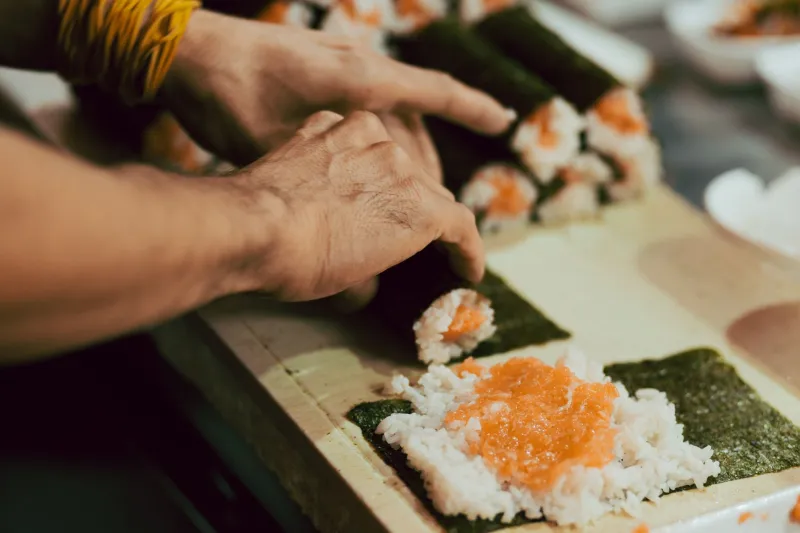
No discussion of umami in sushi is complete without addressing the rice—a component that many diners overlook in favor of the fish resting atop it. Sushi rice is seasoned with a vinegar preparation that is itself a fermented product, and the acidic environment it creates serves a precise function beyond flavor: it modulates the way glutamate interacts with taste receptors, effectively lowering the threshold at which umami is perceived.
The temperature at which rice is served—traditionally body temperature, approximately 98°F—is not a matter of aesthetic preference. Warmth accelerates volatile compound release, meaning that the aromatic dimension of umami reaches the olfactory system simultaneously with the taste signal from the tongue. The result is a fuller, more three-dimensional flavor experience. This is why sushi consumed cold, a common occurrence when takeout containers sit too long, tastes fundamentally different from sushi served at the counter by the chef's own hand.
The Chef as Flavor Scientist
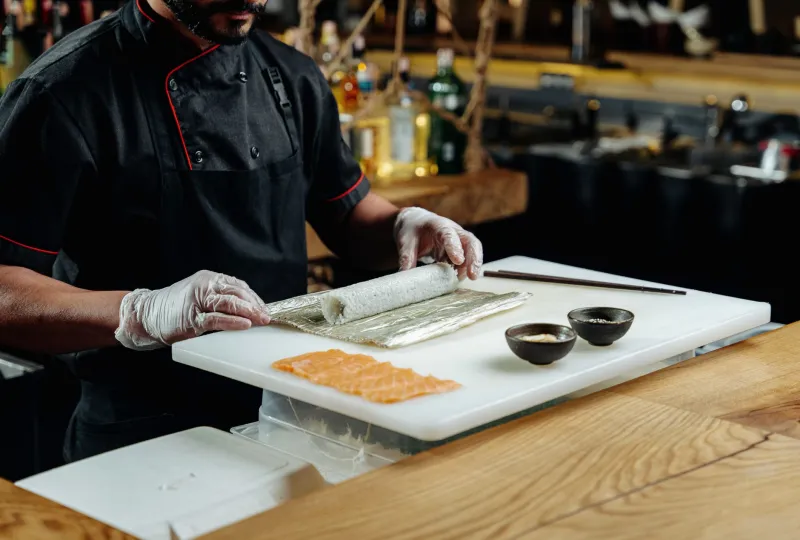
What separates a master sushi chef from a competent one is not merely technical execution—it is the capacity to think in systems. Every ingredient on the menu exists within a network of biochemical relationships. Aging decisions made on Tuesday affect the flavor profile of Friday's service. The fermentation stage of a particular batch of soy sauce influences how aggressively a piece of fish should be brushed before service. The acidity level of the season's rice vinegar adjusts the umami threshold for every diner at the counter.
At Ikeda Osushi, this systems-level thinking is embedded in the kitchen's daily practice. It is why the menu changes not merely with the seasons but with the specific week's sourcing, the current fermentation status of house condiments, and the aging trajectories of individual fish. Diners who visit twice in the same month may encounter the same species prepared to entirely different flavor profiles—not because of inconsistency, but because of deliberate recalibration.
Tasting with Intention
For the American diner seeking to engage more deeply with sushi, understanding fermentation and umami offers a new vocabulary for the experience. Rather than evaluating a piece of nigiri solely on the basis of freshness or visual presentation, consider the depth behind the initial impression. Ask whether the flavor develops over several seconds or resolves immediately. Notice whether the rice and fish seem to amplify each other or exist in parallel. These are the signatures of a chef who has done the mathematics.
The most extraordinary sushi is not the most dramatic. It is the most considered—built from ingredients whose transformation has been guided with patience, precision, and a thorough understanding of what time and fermentation can achieve. At Ikeda Osushi, that understanding is not incidental to the menu. It is the foundation upon which every dish is constructed.