Defining the Unmistakable: The Principles That Elevate Sushi from Routine to Remarkable
Walk into enough sushi restaurants across the United States and a troubling pattern emerges. The menus look familiar. The presentations are recognizable. The fish arrives cold and the rice arrives warm. And yet something essential is missing — a quality that resists easy description but announces itself unmistakably to anyone who has experienced the real thing. That quality is not accidental. It is the product of a coherent philosophy, applied consistently across every dimension of the craft.
At Ikeda Osushi, that philosophy is neither abstract nor decorative. It is operational. It informs how ingredients are selected, how techniques are taught, how the dining room is composed, and how every guest interaction is handled. To understand what separates sushi of genuine distinction from the ordinary, it helps to examine the specific principles that define that standard — and why each one matters.
The Integrity of the Ingredient Above All Else
No principle carries more weight in serious sushi cuisine than the primacy of the ingredient. This is not a sentiment. It is a technical reality. Sushi preparation involves minimal intervention — no heavy sauces, no prolonged cooking processes, no aromatic masking. The fish speaks for itself, which means the fish must have something worth saying.
At the highest level of the craft, sourcing is not a purchasing decision. It is a curatorial act. Chefs at elite establishments develop relationships with specific suppliers, fishermen, and distributors whose standards align with their own. They understand the difference between a bluefin tuna caught off the coast of New England and one sourced from the Pacific, and they know how the handling of that fish from boat to kitchen affects its final expression on the plate.
The standard at Ikeda Osushi requires that every fish served meets criteria for freshness, fat content, texture, and provenance. No ingredient that fails this evaluation reaches the counter — regardless of what it may cost to replace it. That level of discipline is not common, and its absence is precisely what makes so much commercially produced sushi feel hollow.
Rice as the Measure of a Chef's Discipline
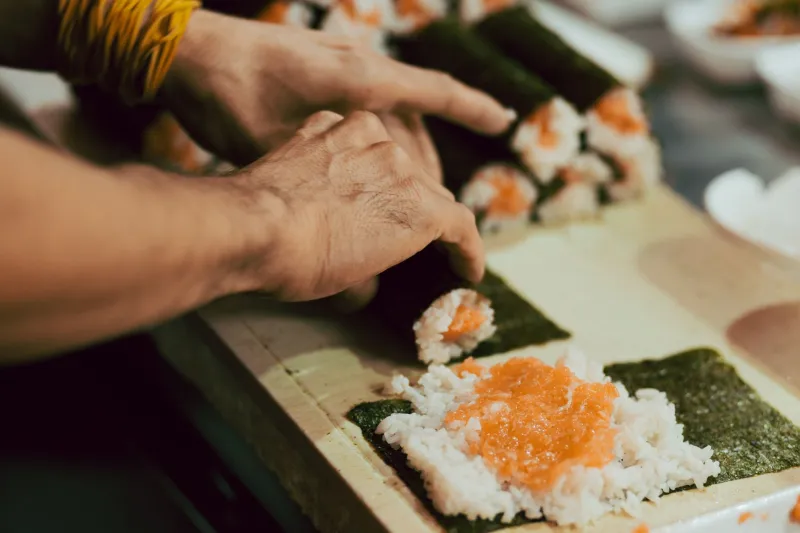
Among initiated diners, the rice is the first thing evaluated — not the fish. This may seem counterintuitive to American guests more accustomed to focusing on the protein, but it reflects a deep truth about the craft. Shari, the seasoned sushi rice, is the foundation upon which everything else is built. Its temperature, its seasoning, its texture, and the way it yields under the fingers of the chef all communicate the level of care invested in the kitchen.
Properly prepared shari holds its form without compacting. Each grain retains individuality while cohering as a unit. The balance of rice vinegar, salt, and sugar must be calibrated to complement — not compete with — the fish it will carry. And crucially, it must be served at a temperature that mirrors the warmth of the human hand, a detail that affects not only texture but the way fat in the fish melts and releases its flavor.
This is not a step that can be rushed or approximated. Chefs who have trained within a rigorous tradition understand that the rice is where their discipline becomes visible. At Ikeda Osushi, the preparation of shari follows a protocol refined over years of practice, with no shortcuts permitted regardless of service volume or time pressure.
The Ethics of Restraint in Technique
Modern American dining culture often rewards complexity — the more elements on a plate, the more a restaurant signals ambition. Serious sushi operates on an entirely different logic. Here, restraint is the mark of confidence. The chef who resists the impulse to add, embellish, or modify demonstrates a mastery that the chef who layers on flavors does not.
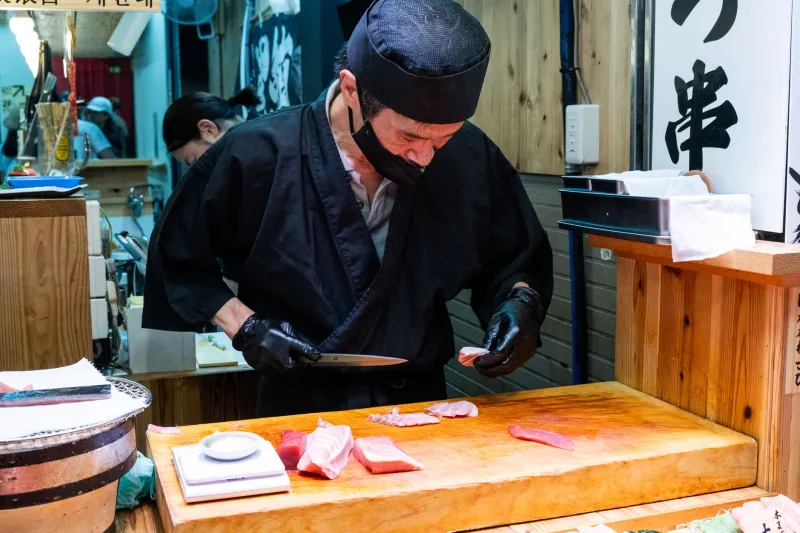
This principle manifests in specific ways. The cut of each fish is calibrated to its particular texture and fat distribution. A leaner fish may be sliced thicker to provide the palate with sufficient substance; a fattier cut may be drawn thin to allow its richness to unfurl without overwhelming. The knife work required to execute these distinctions accurately is the product of years of repetition, not months.
Presentation follows the same ethic. A piece of nigiri at Ikeda Osushi is not adorned for visual effect. Its appearance is a direct expression of its construction — the arc of the fish over the rice, the slight compression at the center, the clean edges. Garnish, when it appears, serves a functional purpose: a touch of wasabi positioned to bloom with the fish's natural oils, a brushing of nikiri soy applied at the precise moment it will enhance without dominating.
Consistency as the True Test of Mastery
Any kitchen can produce an exceptional dish on a given evening. The measure of a serious establishment is whether it can produce that dish with equal precision on the hundredth occasion as on the first. Consistency is not glamorous, but it is the quality that earns and sustains trust.
For American diners accustomed to variability — where the quality of a restaurant experience can shift meaningfully between visits — encountering genuine consistency can be quietly revelatory. It signals that what they are receiving is not the product of inspiration or luck, but of a system. Standards exist, they are enforced, and they do not bend under the pressures of a busy service.
At Ikeda Osushi, consistency is treated as a non-negotiable outcome. The systems that support it — from the handling protocols for incoming fish to the preparation sequences followed during service — are designed to eliminate the variables that produce inconsistency. This requires investment: in training, in sourcing relationships, in the physical infrastructure of the kitchen. It is an investment that most commodity sushi operations are unwilling or unable to make.
What Discerning Diners Should Look For
For American guests navigating a sushi landscape that ranges from supermarket trays to omakase counters, a few observable markers can help distinguish the genuine from the approximate. Notice the temperature of the rice — it should feel alive, not cold. Observe the chef's knife work — cuts should be deliberate and clean, not hesitant. Consider whether the fish tastes of itself or of the sauce applied to it. Ask where the fish was sourced, and notice whether the answer is specific or vague.
These are not tests designed to intimidate. They are the natural consequences of paying attention — the same attention that a serious chef applies to every piece they prepare. The philosophy that governs elite sushi is, at its core, a philosophy of respect: for the ingredient, for the technique, for the guest, and for the tradition that makes all of it meaningful.
That philosophy is not proprietary to any single restaurant. But it is rare enough, and consequential enough, that when you encounter it — as guests at Ikeda Osushi are invited to do — the difference is unmistakable.