What the Fish Tells You: Sensory Markers That Separate Exceptional Sushi from the Ordinary
There is a moment in every serious sushi chef's morning—before the restaurant opens, before the mise en place is complete—when they stand at the fish delivery and simply look. Not for a checklist item to confirm. Not for a label to verify. They look because the fish itself is communicating, and a trained eye can hear it clearly.
For most American diners, the evaluation of sushi quality happens at the table, after the fact: a piece of hamachi that melts cleanly on the palate, or a slice of maguro that carries a faint, unpleasant undertone. But quality—or its absence—was already fully visible long before that moment. Learning to read those signals transforms a passive dining experience into an informed one.
The Language of Color
Color is the first and most immediate indicator of freshness in raw fish, and its nuances are far more specific than simply "bright versus dull."
In maguro (bluefin tuna), the spectrum of quality is encoded in the depth and consistency of its red. Premium akami—the lean loin section—should present a vivid, jewel-like crimson that holds its saturation uniformly across the cut surface. Any brownish oxidation along the edges, or a grayish cast at the center, indicates that the fish has been exposed to air too long or was not stored at optimal temperatures. The browning itself is a chemical process: myoglobin, the protein responsible for the red pigment in tuna flesh, degrades in the presence of oxygen and heat.
Otoro and chutoro, the fatty belly sections of bluefin, present a different visual profile. Their color is a softer, more marbled pink-white, threaded with ivory fat lines that should appear clean and distinct rather than yellowed or smeared. The fat itself is a critical visual marker: fresh toro fat is bright and almost translucent, while aging fat takes on a dull, waxy appearance.
White-fleshed fish such as hirame (flounder) and tai (sea bream) communicate through translucency. A freshly sliced piece of hirame should appear almost luminous when held toward light, with a pearlescent quality that diminishes significantly within hours of cutting. Opacity in white fish is not inherently disqualifying, but a milky or flat surface where translucency is expected warrants scrutiny.
Texture Before the First Bite
A skilled chef evaluates texture visually and tactilely before any fish reaches a plate. For the attentive diner, visual texture cues remain highly informative even across the counter.
Fresh fish holds its shape with quiet authority. A slice of yellowtail laid across a cutting board should lie flat and firm, its edges clean and defined. Fish that has begun to degrade loses structural integrity—edges curl, surfaces become tacky, and the natural tension in the flesh gives way to a slight slump. This loss of firmness is caused by enzymatic breakdown of muscle proteins, a process that accelerates rapidly above proper storage temperatures.
For fish served as nigiri, the interaction between the fish and the rice is itself a textural signal. A properly prepared piece should exhibit slight resistance before yielding—what Japanese culinary tradition describes as koshi, or structural resilience. Fish that collapses immediately or adheres unevenly to the rice has likely passed its optimal window.
The marbling in fatty fish deserves particular attention. In salmon, premium quality presents as fine, evenly distributed fat lines rather than thick, irregular deposits. Coarse marbling in salmon can indicate slower-growing, less carefully managed fish, while exceptionally fine marbling is a hallmark of well-sourced, properly handled product.
Aroma: The Most Honest Signal
Of all the sensory indicators available to a diner, aroma is the least forgiving and the most honest. Premium sushi-grade fish should carry almost no discernible odor at close range—or, at most, a clean, oceanic freshness that evokes sea spray rather than the harbor. Any pronounced "fishy" smell is a sign of trimethylamine production, a compound generated by bacterial activity as fish ages past its peak.
This is not a marginal distinction. The difference in aroma between fish served at its optimal point and fish served even a day past that point is perceptible to any diner paying attention. At the table, lean slightly toward your nigiri before eating. If the fish announces itself through smell before it reaches your palate, that is information worth noting.
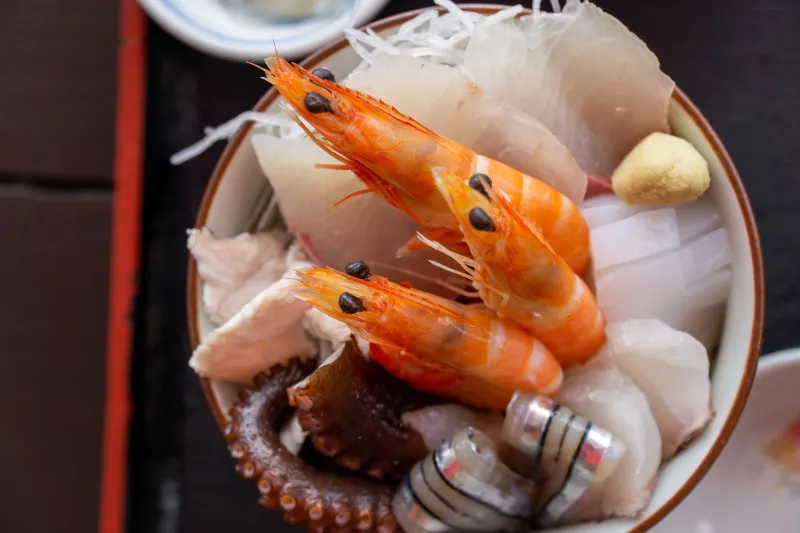
Shellfish and crustacean components—uni, hotate (scallop), and ebi (shrimp)—are particularly expressive aromatically. Fresh uni carries a briny, mineral sweetness reminiscent of a clean tide pool. Ammoniated or sulfurous notes in uni are a reliable indicator of age or improper storage, and no amount of visual presentation can mask them.
What the Restaurant Itself Tells You
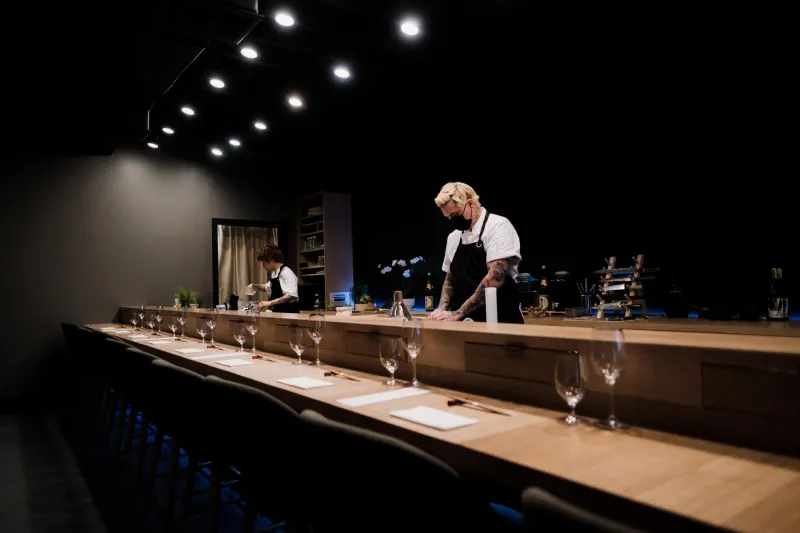
Beyond the fish, context provides its own sensory data. A sushi counter that smells of nothing but clean, cool air is a restaurant managing its product correctly. A kitchen that carries even a faint background odor of old fish suggests that standards somewhere in the supply chain or storage protocol have been compromised.
The temperature of the fish as it arrives at your plate also communicates quality of care. Sushi served at the precise temperature a chef intends—cool but not refrigerator-cold, allowing fat to express its full flavor—reflects attention to the last detail of preparation.
At Ikeda Osushi, these sensory standards are not aspirational benchmarks. They are the baseline from which every piece of fish we serve is evaluated. We invite our guests to engage with these cues actively, because an informed diner is ultimately the finest measure of the craft we practice every day.