Quiet Complexity: How the American Palate Grew Sophisticated Enough to Taste True Sushi
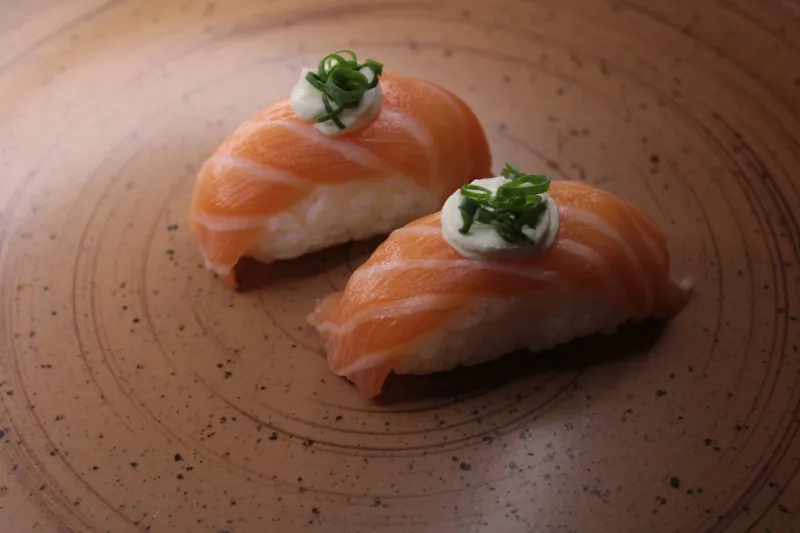
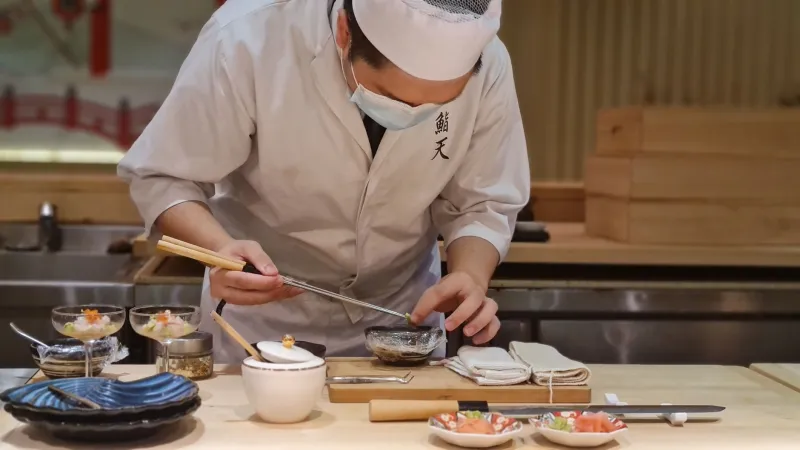
There is a particular moment that many first-time visitors to a premium sushi counter describe in strikingly similar terms. The chef sets down a single piece—perhaps a delicate slice of hirame, or a whisper-thin cut of madai—and the diner pauses, expecting something that never quite arrives. No salt assault. No fat-driven richness. No sauce competing for attention. What greets them instead is something far more demanding: subtlety, restraint, and a flavor architecture that asks the guest to meet it halfway.
For much of the twentieth century, that invitation went largely unanswered in the United States. Today, the response is changing—and the reasons behind that shift illuminate something profound about how Americans have come to understand food, flavor, and the act of eating itself.
The Flavor Baseline Problem
To appreciate why traditional sushi's minimalism once struggled to resonate with American diners, it helps to understand the sensory environment in which most of them were raised. Decades of industrially processed food conditioned the American palate toward amplified signals: sodium levels calibrated for immediate impact, sweetness engineered to trigger satisfaction within the first bite, and fat content designed to deliver sustained richness that required no interpretive effort from the eater.
This was not a moral failing. It was adaptation. When flavors are routinely loud, the nervous system recalibrates. Subtlety registers as absence rather than presence. A piece of pristine bluefin tuna, resting on a small mound of vinegared rice, offers no such shortcuts—its appeal lives in gradation, in the way mineral coolness gives way to clean oceanic depth, in the barely perceptible sweetness that follows the fish's natural fat as it warms against the tongue.
For a palate calibrated to processed food's intensity, that progression was simply too quiet to hear.
A Measurable Cultural Recalibration
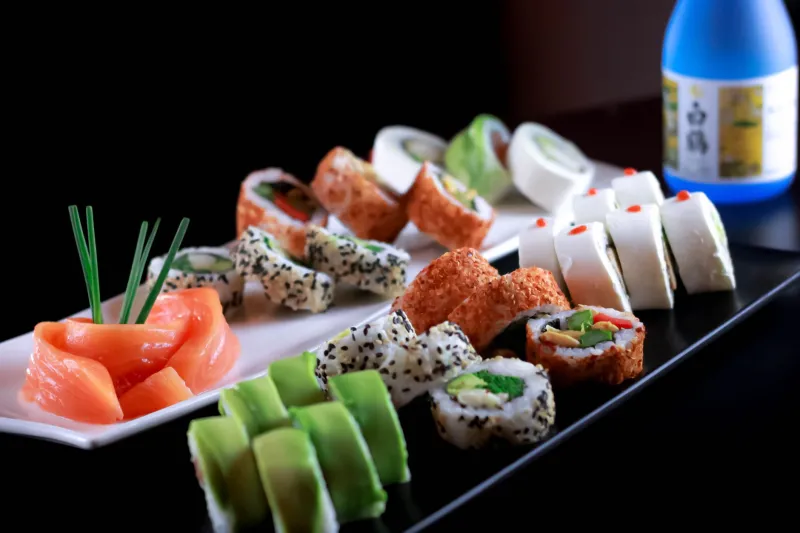
What has changed is not merely exposure to sushi—Americans have been eating California rolls and supermarket hand rolls for decades. What has changed is the underlying sensory framework that diners bring to the table.
The farm-to-table movement, the craft fermentation renaissance, the widespread embrace of single-origin coffee and artisanal cheese: each of these phenomena trained a segment of the American dining public to slow down, to isolate flavor compounds, and to find satisfaction in complexity rather than volume. A diner who has learned to distinguish between the grassy brightness of a lightly processed olive oil and the mellow roundness of one that has been cold-extracted is, neurologically speaking, better equipped to detect the faint iodine note in a slice of uni or the clean finish of a properly rested piece of aged soy-marinated tuna.
This is not coincidence. It is the cumulative effect of a food culture that has spent roughly two decades teaching itself to listen.
Umami as a Gateway, Not a Destination
Among the flavor dimensions that define authentic sushi, umami occupies a position of particular importance—and particular misunderstanding. In popular American discourse, umami is often reduced to a kind of savory intensity, a synonym for richness or depth. This framing, while not entirely wrong, misses the quality that makes umami so central to the Japanese culinary tradition: its ability to extend and amplify other flavors without overwhelming them.
In a properly prepared piece of nigiri, umami functions less as a flavor itself and more as a medium through which other flavors become legible. The glutamates present in aged fish, in kombu-seasoned rice vinegar, in the thin application of house-made soy that a skilled itamae brushes across a piece of fish before service—these compounds do not shout. They clarify. They lengthen the finish of a flavor, allowing its quieter notes to persist long enough to be recognized.
The American palate's growing fluency with fermented foods has been particularly significant here. Kimchi, miso, aged cheeses, sourdough bread, craft beer—all of these deliver glutamate-rich flavor profiles that, over time, train the tongue to recognize and appreciate umami's more restrained expressions. A diner who has learned to taste the difference between fresh mozzarella and a properly aged Parmigiano-Reggiano has already begun developing the sensory vocabulary that premium sushi rewards.
What Pristine Sourcing Actually Tastes Like
At Ikeda Osushi, the commitment to sourcing fish of the highest possible quality is not simply a matter of safety or prestige—it is a prerequisite for the flavor experience that authentic sushi is designed to deliver. A piece of fish that has been improperly handled, held too long, or transported under inadequate conditions loses precisely the qualities that make traditional preparation meaningful. The mineral freshness fades. The natural sugars in the flesh begin to break down. What remains may be technically safe and visually acceptable, but it will not speak.
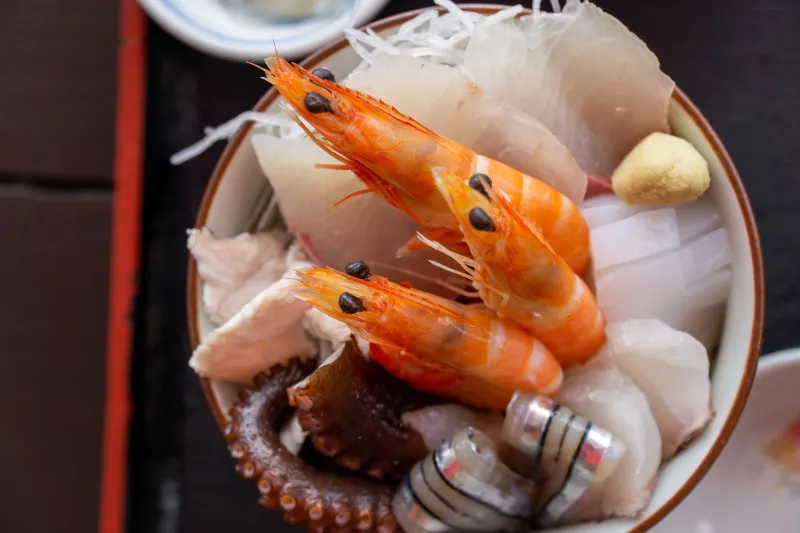
Properly sourced fish—brought in through trusted supply relationships, handled with cold-chain discipline from the moment of harvest, and evaluated by a chef with the training to distinguish between acceptable and exceptional—arrives at the cutting board with a story still intact. That story is told in flavor: the clean salinity of fish from cold, deep water; the subtle sweetness that distinguishes wild-caught yellowtail from its farmed counterpart; the translucent, almost crystalline quality of a scallop that has been harvested and transported with genuine care.
These are not flavors that announce themselves. They are flavors that reward attention—and an American dining public that has spent years developing that attention is, for the first time in this country's culinary history, broadly equipped to receive them.
The Role of Rice in Teaching Restraint
It would be incomplete to discuss the American palate's evolving relationship with sushi without acknowledging rice—specifically, the vinegared, precisely seasoned shari that forms the foundation of every piece of nigiri. For diners accustomed to rice as a neutral backdrop, the sushi rice prepared by a trained itamae can be a revelation: subtly sweet, faintly acidic, warm but not hot, yielding under gentle pressure while maintaining just enough structural integrity to support the fish above it.
The seasoning of sushi rice is calibrated to complement rather than compete. A chef who oversalts or over-acidulates the rice has, in effect, shouted over the fish. The discipline required to find that balance—and to maintain it across an entire evening of service—is one of the more demanding aspects of sushi training, precisely because it requires the chef to think not about maximizing any single flavor, but about creating a platform on which quieter flavors can be heard.
This is the umami paradox at its most precise: the most sophisticated flavor experience available in contemporary American dining is also, by design, the most restrained. The diners who are finding their way to it are not doing so despite their cultural background. They are doing so because that background has, gradually and unevenly, prepared them for exactly this kind of listening.