Fewer Choices, Greater Depth: The Sourcing Conviction Behind a Premium Sushi Experience
There is a particular kind of confidence required to present a guest with a menu that fits on a single page. In an American dining culture that has long equated abundance with value, the restrained sushi counter—offering perhaps eight to twelve fish on any given evening—can read, at first glance, as sparse. It is not. What appears to be limitation is, in practice, the outward expression of an exacting sourcing philosophy, one that prioritizes relationship, seasonality, and precision over the comfortable illusion of endless choice.
At Ikeda Osushi, this philosophy is not a marketing posture. It is the structural foundation upon which every service is built.
Why Menu Size Signals Something Deeper
Consider what an expansive sushi menu actually requires. To offer thirty or forty fish varieties on any given night, a kitchen must source broadly—drawing from multiple distributors, accepting whatever is available, and relying on cold storage to bridge the gaps between peak freshness and customer demand. The logistics of scale demand compromise, and those compromises, however invisible to the untrained eye, are legible on the palate.
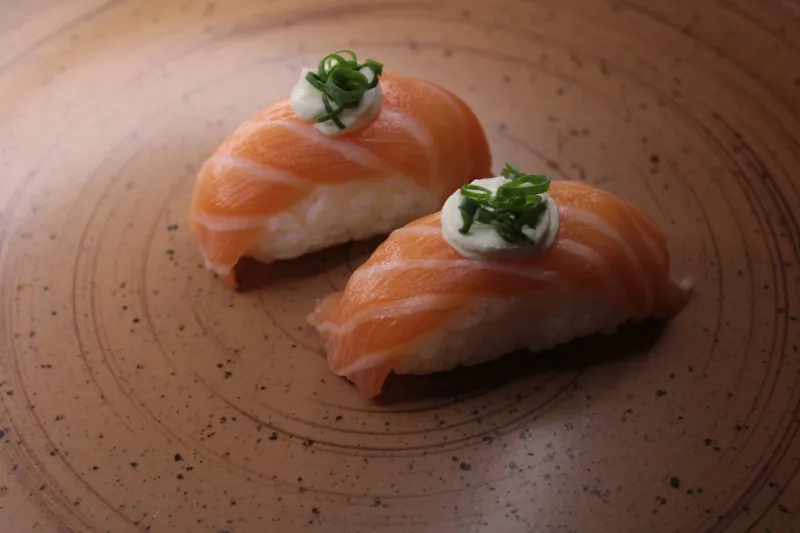
A focused menu, by contrast, demands that a chef commit. Each fish variety offered must be defensible—not merely available, but genuinely exceptional on that specific day. When the selection is narrow, there is nowhere to hide mediocrity behind novelty. Every piece of nigiri becomes a direct reflection of the sourcing decision that preceded it.
This is the quiet discipline that separates a kitchen operating from conviction from one operating from convenience.
The Architecture of a Supplier Relationship
Premium sushi sourcing at the level Ikeda practices is not transactional. It is relational, and relationships of this kind take years to build and considerable effort to maintain.
The most respected sushi-grade fish in the United States moves through a relatively small network of specialized importers and domestic purveyors who have cultivated direct ties with fishing operations in Japan, the Pacific Northwest, the Gulf Coast, and beyond. Gaining access to the finest cuts—the otoro from a specific bluefin auction lot, the uni harvested from a particular kelp bed off the California or Maine coast—requires that a restaurant demonstrate consistent demand, clear standards, and the kind of sustained loyalty that makes a chef a preferred buyer rather than simply another account.
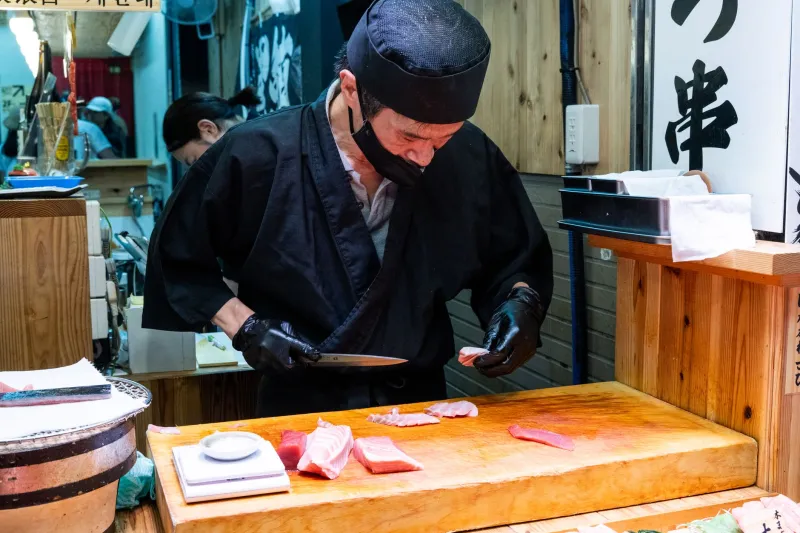
Those relationships translate directly to what arrives at the cutting board. A trusted purveyor will hold a specific fish for a chef who has earned that consideration. They will communicate when a season is running early or late, when a particular catch is exceptional, or when conditions have made a given week's supply unreliable. That intelligence is invisible to the guest but shapes everything they taste.
Seasonality as Editorial Judgment
One of the most profound expressions of a sourcing philosophy is the willingness to rotate ingredients out of the menu entirely—not because demand has fallen, but because the season has passed and quality can no longer be guaranteed.
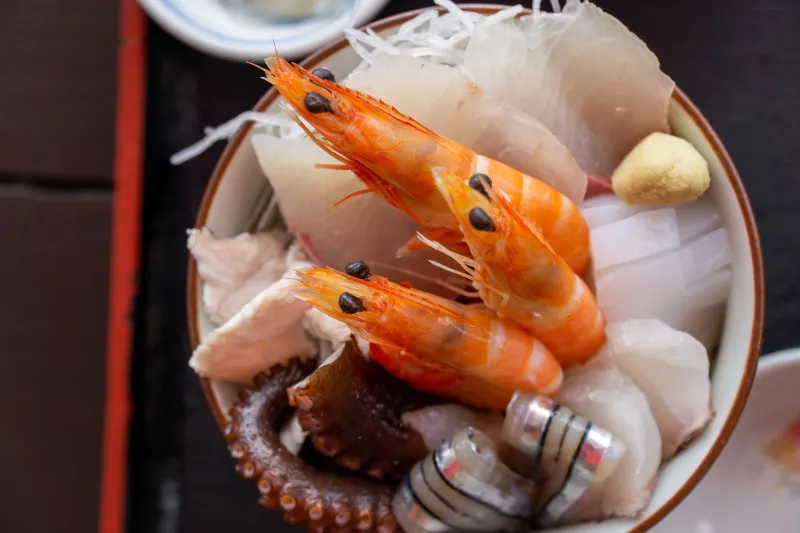
American diners are accustomed to year-round availability. Salmon, tuna, shrimp—these proteins appear on menus in January and July with equal frequency, sustained by global supply chains and sophisticated preservation. Premium sushi takes a different position. The Japanese culinary tradition of shun—honoring an ingredient at the precise peak of its seasonal expression—is not nostalgia. It is a quality standard.
When Ikeda removes a fish from the menu, it is because the chef has determined that what is currently available does not meet the standard the guest deserves. That decision requires discipline, and it requires trust in the guest's willingness to accept the guidance. It also requires a menu structure flexible enough to accommodate that rotation—which, again, is only possible when the menu is intentionally focused rather than sprawling.
A restaurant offering forty varieties cannot afford to remove ten of them because the season has turned. A restaurant offering twelve can make that call without hesitation.
What Constraint Communicates to the Guest
For the American diner encountering a focused sushi menu for the first time, the initial instinct may be to search for something familiar—a California roll, a spicy tuna option, a recognizable anchor in unfamiliar territory. That instinct is understandable, and it reflects the way most sushi in the United States has been presented: as a broad, accommodating, endlessly customizable experience.
The premium omakase-adjacent model operates from a different premise. The chef is not asking the guest to navigate a catalog. The chef is extending an invitation to trust—to accept that the selections on offer represent the best available expression of the craft on that particular evening, chosen not to satisfy every possible preference but to deliver the clearest possible articulation of quality.
This is a meaningful distinction. When a guest orders from a menu of forty items, they are exercising preference. When a guest sits down to a focused, seasonally driven selection at a counter like Ikeda's, they are participating in a curated experience. The difference is not merely philosophical—it changes the nature of the meal itself.
The Cost of Getting It Right
It is worth acknowledging directly that sourcing at this level carries a cost, and that cost is reflected in the price of the meal. Premium fish, secured through trusted relationships, harvested and transported under exacting conditions, and presented at genuine peak freshness, is expensive. The margins that sustain a sprawling menu—where lower-grade product can be absorbed into a roll or disguised beneath sauce—are not available when every piece of fish must stand alone.
What the guest receives in exchange for that investment is not simply better fish. It is the assurance that every element of the sourcing chain has been considered, negotiated, and held to a standard. It is the confidence that the chef's reputation is staked on each piece, and that the selection on the menu tonight represents not what was available, but what was worth offering.
Conviction as Culinary Identity
The most enduring sushi restaurants in America—those that have built genuine reputations among serious diners rather than casual audiences—share a common characteristic. They know what they are. They have made deliberate choices about what they will and will not serve, and those choices are consistent across seasons and years.
That consistency is not rigidity. The menu at a restaurant like Ikeda changes constantly, responding to season, to catch, to the specific excellence of what has arrived that week. But the philosophy governing those changes remains fixed: offer only what is genuinely exceptional, source it through relationships built on mutual respect, and trust that a guest who understands the reasoning will find more satisfaction in eight perfect pieces than in forty adequate ones.
In a dining landscape still largely shaped by abundance, that conviction is itself a form of hospitality—one that respects the guest's palate enough to make no apologies for the standard it keeps.