The True Cost of Excellence: Understanding What Premium Sushi Ingredients Actually Require
Few conversations in American dining generate more friction than the one about price. In a culture where value is frequently measured by portion size and where the word "expensive" carries an implicit accusation, premium sushi pricing occupies an uncomfortable position. Omakase menus at serious establishments routinely run well above what most Americans associate with a restaurant meal, and the reaction among first-time visitors is often bewilderment.
The purpose of this article is not to defend pricing as a category. It is to make the invisible visible — to trace the actual journey of a premium ingredient from its origin to the counter at Ikeda Osushi, and to account honestly for every cost incurred along the way.
The Fish Before the Fish
Consider what happens before a piece of bluefin tuna arrives at any sushi counter in the United States. The fish must first be caught — typically by longline vessels operating in specific fishing grounds, often in Japanese waters where the most prized specimens are found. The catch is evaluated immediately upon landing, assessed for fat content, flesh color, and the precise distribution of marbling that separates a piece worth premium pricing from one that is not.
Fish that meets the highest standards are graded accordingly. This grading system is not informal. At major markets like Toyosu in Tokyo, tuna are auctioned in a process that can drive prices for a single fish into the tens of thousands of dollars. The economics of that auction — who bids, how aggressively, and for what quality tier — establish a baseline that flows through every subsequent transaction.
For American restaurants sourcing at this level, access to that market requires relationships. Not catalog subscriptions or online ordering portals — relationships. Importers who have spent years building trust with specific auction participants, who have a track record of handling product correctly, and who understand the expectations of the chefs they serve. At Ikeda Osushi, these relationships represent years of investment that never appear as a line item on a menu but are embedded in every piece served.
The Cold Chain Is Not Free
Once a fish of sufficient quality has been secured, it must travel. The logistics of moving sushi-grade product from Japan to the United States — or from domestic fisheries along the Pacific or Atlantic coasts to a restaurant in a major American city — involve a cold chain of extraordinary precision.
Temperature tolerances for premium fish are narrow. A deviation of a few degrees during transit can alter texture and accelerate cellular breakdown in ways that compromise the eating experience even when the fish appears visually acceptable. Maintaining those tolerances across international shipments requires specialized packaging, dedicated cold storage at transit points, and in many cases overnight air freight — one of the most expensive modes of transportation available.
For fish arriving from Japan, the freight cost alone can represent a significant percentage of the total ingredient cost. Add customs brokerage, domestic cold-chain distribution, and the handling required to move product from a receiving dock to a chef's refrigeration unit without interruption, and the logistics of a single delivery become a substantial economic undertaking.
This is before a knife has touched the fish.
Yield, Waste, and the Reality of Preparation
Restaurant economics operate on the concept of yield — the percentage of a purchased ingredient that actually ends up on a plate. For commodity proteins in conventional kitchens, yield calculations are straightforward. For premium sushi, they are not.
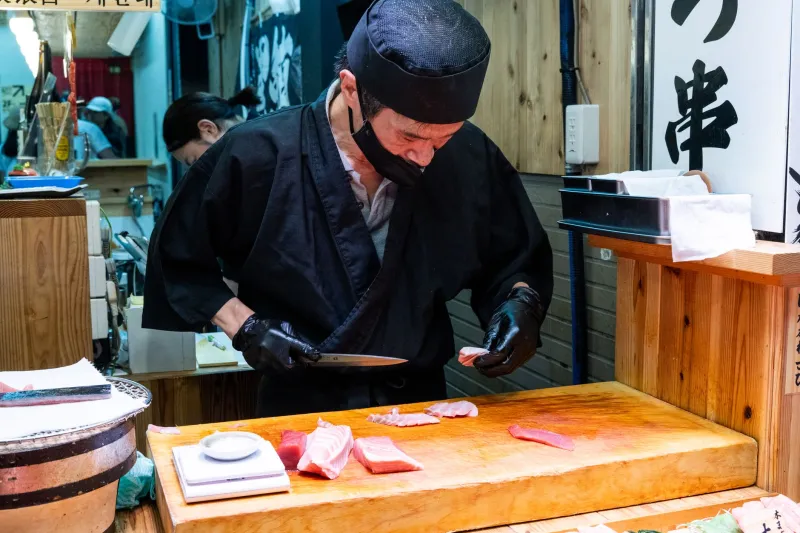
A whole bluefin tuna, even one purchased at a premium price for its quality, does not yield 100 percent usable nigiri. Different sections of the fish serve different purposes. Some portions are prized for their fat content and are appropriate for specific preparations. Others are used in different ways or not at all. The portions that do not make it to the counter as nigiri are not wasted in a culinary sense — they may appear in other preparations — but the cost of the whole fish is allocated across a smaller quantity of premium pieces than a casual observer might assume.
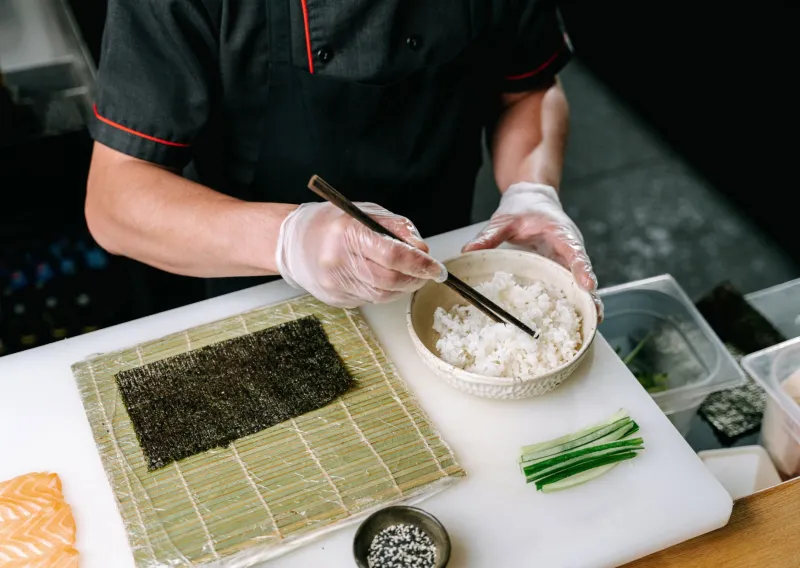
The same logic applies to rice, which at a restaurant like Ikeda Osushi is not a background ingredient but a central component that demands its own sourcing rigor. Specific rice varieties, imported or domestically grown under controlled conditions, are selected for their starch content, grain size, and cooking behavior. Batches that do not meet specification are not used. The cost of that selectivity is real.
The Chef's Investment Is Also an Ingredient
There is a category of cost that does not appear in any invoice but is present in every piece of nigiri served at Ikeda Osushi: the accumulated investment of the chef's training.
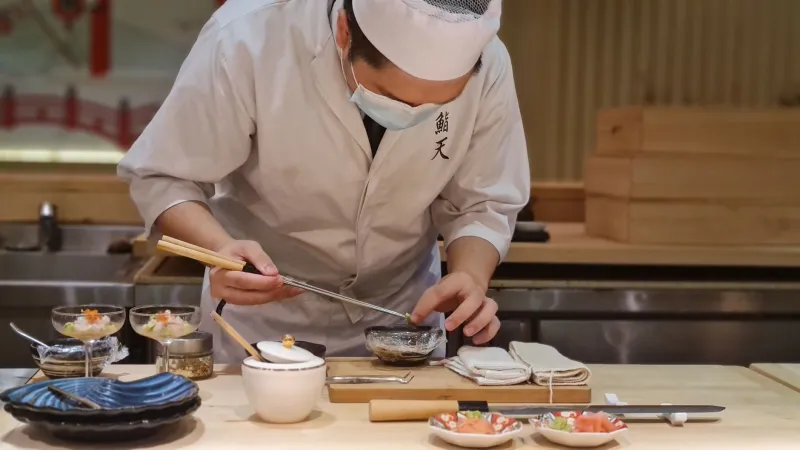
A sushi chef of serious credentials has typically spent a minimum of a decade in formal apprenticeship before being considered capable of independent service. During that period, they were not merely learning techniques. They were developing a sensory vocabulary — the ability to evaluate fish by touch and smell, to feel the correct pressure in a piece of nigiri, to understand how a particular variety behaves differently across seasons and preparation methods.
That investment does not amortize in any conventional accounting sense. It is present in every service, informing every decision. When a chef at Ikeda Osushi selects one piece of fish over another, or adjusts the seasoning of the rice in response to a shift in humidity, they are drawing on a body of knowledge that took years to acquire. The price of a premium omakase menu reflects, in part, the cost of having that knowledge available to you for the duration of your meal.
What the Price Is Actually Saying
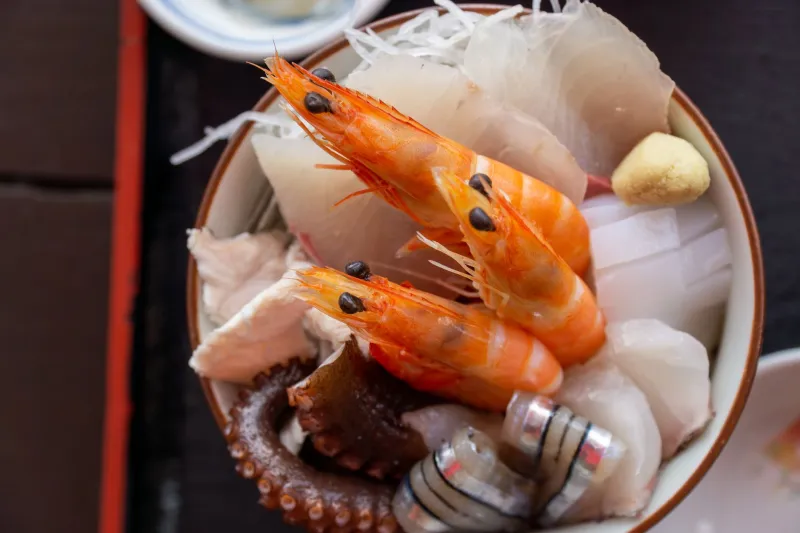
When diners encounter omakase pricing that surprises them, the surprise often reflects a gap between what is visible and what is not. The fish on the plate is visible. The cold chain that delivered it, the auction that priced it, the relationship that secured access to it, the years of training that prepared the chef to handle it correctly — none of these are visible.
At Ikeda Osushi, the pricing structure is not a statement about exclusivity for its own sake. It is the honest arithmetic of doing things correctly — of sourcing without compromise, of training without shortcuts, of maintaining a standard that does not negotiate with convenience.
Understanding that arithmetic does not make the meal less expensive. But it does make the value legible. And for diners who have experienced what that standard produces at the counter, the arithmetic tends to make a different kind of sense entirely.