Nature's Calendar on the Plate: Understanding the Seasonal Soul of Omakase
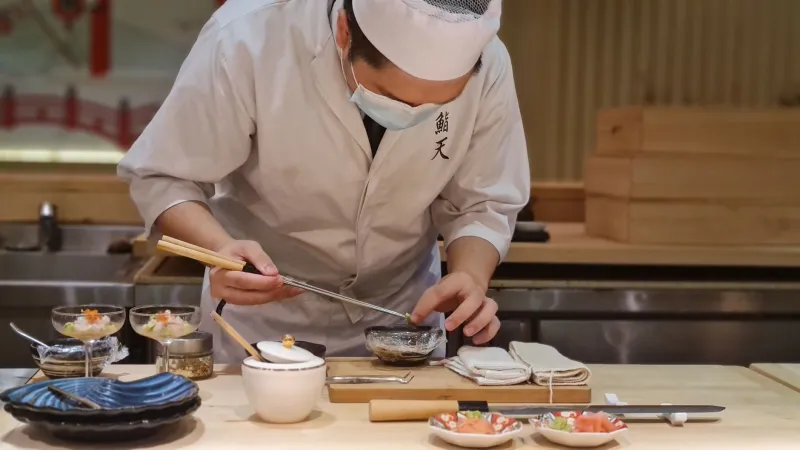
There is a moment, familiar to anyone who has sat at a premier sushi counter, when the chef places a piece before you and says simply: "This is the season for it." The phrase sounds modest, almost offhand. But behind it lies one of the most sophisticated organizing principles in Japanese culinary culture — a philosophy called kisetsukan, or the deep awareness of season. At Ikeda Osushi, that awareness is not decorative. It is structural. It shapes every sourcing decision, every preparation choice, and every arc of the omakase experience from the first delicate course to the last.
For American diners accustomed to year-round availability — salmon in January, bluefin in August, asparagus whenever the mood strikes — this philosophy can feel foreign at first. But once understood, it fundamentally changes how one receives a meal. The omakase counter becomes less like a restaurant and more like a window, and through it, you begin to see the natural world in motion.
What Kisetsukan Actually Means
Translated loosely, kisetsukan means "a sense of the seasons" — but that translation undersells the concept considerably. In Japanese aesthetic tradition, seasonality is not simply about what happens to be fresh. It is about attunement: the idea that human experience, artistic expression, and daily life should remain in honest dialogue with the rhythms of the natural world. This sensibility runs through Japanese poetry, architecture, textile design, and, with particular elegance, its cuisine.
For a sushi chef trained in this tradition, the question is never merely what is available today? The question is what does this moment in the year demand? The distinction matters. The first question is logistical. The second is philosophical — and it produces entirely different menus.
Spring: Subtlety and Renewal
As winter releases its hold, the waters around Japan begin to shift. Spring brings a parade of ingredients defined by their lightness and youth. Shiro amadai — white tilefish — makes its appearance, its flesh clean and faintly sweet. Young squid, known as hotaru ika or firefly squid, emerge in the Sea of Japan, their brief season measured in weeks rather than months.
At the sushi counter, spring menus often carry a deliberate restraint. The flavors are not bold; they are precise. A premium chef uses this season to demonstrate that subtlety is its own form of mastery. Preparations lean toward minimal intervention — clean cuts, light seasoning, careful temperature management — allowing the inherent delicacy of spring ingredients to speak without competition.
For American diners, spring courses may feel surprising in their quietude. This is intentional. The season asks for patience and attention, and the chef's menu design reflects that invitation.
Summer: Intensity and the Sea's Full Voice
Summer brings heat, and with it, a shift in character. The ocean grows more expressive. Shima aji — striped jack — reaches its peak fat content. Katsuo, or bonito, runs with exceptional richness early in the season before transitioning to a leaner, more assertive profile by late summer. Certain varieties of sea urchin, particularly from colder northern waters, arrive at their creamiest and most complex.
A thoughtfully constructed summer omakase acknowledges this abundance without becoming indulgent. The chef's task is to sequence intensity with care — to let the fuller flavors of the season register without overwhelming the palate. This is where the architecture of a great omakase becomes visible: the progression from lighter to richer, the placement of a palate-resetting course at precisely the right moment, the decision to feature a particular fish on a particular evening because the specimen delivered that morning was simply too fine to delay.
For guests at the counter, summer is often the season that converts skeptics. The flavors are more immediately legible to palates trained on bolder American cuisine, and yet the discipline of the presentation reveals that accessibility and sophistication are not opposites.
Autumn: Depth, Fat, and the Chef's Quiet Triumph
Among those who study Japanese seasonal cuisine seriously, autumn occupies a place of particular reverence. This is the season of shun — peak ripeness — for many of the most celebrated ingredients in the sushi canon. Bluefin tuna (hon maguro) begins accumulating the deep, marbled fat that defines its finest expressions. Pacific saury (sanma) arrives with a rich, slightly bitter complexity that rewards adventurous diners. Matsutake mushrooms, though not a fish, find their way into certain preparations and broths, lending an earthy counterpoint to the seafood at the center of the menu.
Autumn menus at a serious omakase counter tend to feel the most fully realized — the most complete as compositions. The chef has more to work with, and the ingredients themselves seem to demand a more deliberate hand. Cuts are often thicker. Aging techniques, where appropriate, are employed with greater confidence. The rice, adjusted to complement richer flavors, plays a more prominent structural role.
For American diners, autumn represents an ideal entry point into omakase dining. The flavors are generous and memorable, and the seasonal logic is perhaps easiest to grasp — this is harvest, rendered in the language of the sea.
Winter: Clarity, Cold Water, and the Most Demanding Season
Winter strips the menu down to its essentials. Cold water concentrates flavor and firms texture, producing fish of exceptional clarity and definition. Hirame — flounder — reaches its winter peak, its lean, translucent flesh carrying a delicacy that demands precise knife work and a light touch with seasoning. Certain crabs, particularly snow crab and the prized matsuba variety, become available, their sweetness amplified by cold-water conditions.
The winter omakase is, in many respects, the most demanding to appreciate. There is less fat to carry the flavors, fewer bold signatures to anchor the memory. What remains is craft: the quality of the rice, the precision of the cut, the chef's ability to coax depth from ingredients that reveal their secrets only to those paying close attention.
At Ikeda Osushi, winter menus are constructed with the understanding that some guests will find this season's offerings the most revelatory of the year, and others will need a guide. The chef and counter staff are prepared to offer context — not to explain away the experience, but to deepen it.
Reading the Menu as a Seasonal Document
Once a diner begins to understand kisetsukan, the omakase menu transforms from a sequence of courses into something more like a curated argument about a specific moment in time. Each piece is not simply delicious or not delicious. Each piece is of a season — chosen because it represents that season honestly, because it could not have been served with the same integrity three months earlier or three months hence.
This is the invitation extended at every great sushi counter: not merely to eat well, but to become, for the duration of a meal, genuinely present to the natural world. The chef has done the work of tracking the seasons, building relationships with suppliers who share the same values, and constructing a menu that honors what the year has offered.
All that is asked of the guest is attention — and perhaps, the willingness to let go of what they expected in favor of what the season has actually provided.