Thinning Waters: How Premium Sushi Restaurants Are Rethinking the Fish Supply
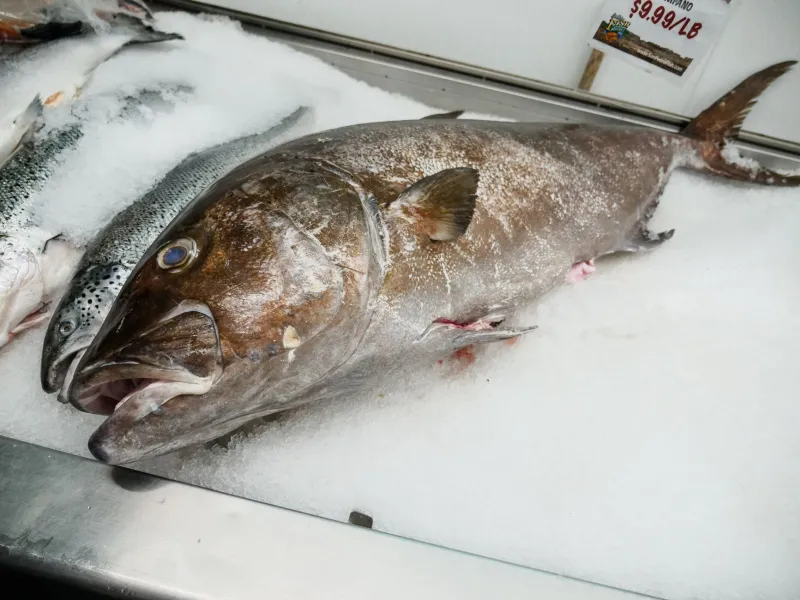
For most American diners, the supply chain that delivers pristine bluefin tuna or wild-caught hokkaido sea urchin to a premium sushi counter is largely invisible. The fish appears, glistening and precise, on a hand-formed pillow of seasoned rice, and the transaction feels almost magical in its seamlessness. What the diner rarely sees is the intricate, increasingly strained network of relationships, regulations, and contingency plans that makes that moment possible.
The reality facing America's top sushi restaurants in the current era is this: the supply of premium Japanese seafood is under genuine and growing pressure, and the chefs who built their menus around specific species, specific regions, and specific seasonal rhythms are being forced to adapt in ways that test both their sourcing networks and their culinary convictions.
A Perfect Storm of Constraints
The pressures are multiple and mutually reinforcing. Japan has significantly tightened domestic fishing quotas on several species — most notably Pacific bluefin tuna — in response to stock assessments that confirmed years of overfishing. The quotas, managed by Japan's Fisheries Agency, have reduced the volume of premium-grade fish available for export even as global demand for authentic Japanese seafood has expanded.
Simultaneously, climate change is redrawing the geography of traditional fishing grounds. Water temperatures in the seas surrounding Japan have risen measurably over the past two decades, affecting the migration patterns, spawning cycles, and population densities of species that have anchored the sushi tradition for centuries. Bafun uni, the intensely flavored sea urchin harvested off Hokkaido's northern coast, faces particular vulnerability as ocean warming disrupts the kelp forests on which it depends.
And then there are the logistical realities of international trade — shifting air freight capacity, cold chain complications, and the occasional regulatory friction that can delay or redirect shipments in ways that leave a chef revising the evening's menu at the last possible moment.
The Importer Relationship as a Strategic Asset
For premium sushi restaurants like Ikeda Osushi, the response to these pressures begins not at the fish market but in the relationships cultivated with specialized importers — a small and highly selective group of companies that maintain direct connections with Japanese fishing cooperatives, auction houses, and individual producers.
These importers function less as vendors than as intelligence networks. They provide advance information about quota changes, seasonal abundance, and quality fluctuations that allows a chef to plan weeks ahead rather than simply react to what arrives. The relationship is reciprocal: the importer benefits from working with chefs who can absorb premium product and use it in ways that justify its cost; the chef benefits from priority access and from the importer's willingness to hold or redirect product when a better option emerges.
At Ikeda Osushi, this relationship is treated as a core operational priority rather than a procurement function. The conversations between the kitchen and its importers are ongoing and substantive — not transactional exchanges but collaborative assessments of what the market is offering and what the restaurant's standards require.
Expanding the Map Without Diluting the Standard
One of the more significant adaptations underway at elite American sushi restaurants involves a careful geographic expansion of the sourcing map. The traditional hierarchy placed Japanese product at the apex of quality almost categorically. That hierarchy is now being reconsidered — not out of cultural compromise, but out of empirical honesty.
Certain domestic American fisheries have matured to the point where their product competes credibly with Japanese equivalents. Maine sea urchin, long considered a distant second to its Hokkaido counterpart, has improved dramatically in handling and processing, and select harvests now meet the standards of the most demanding sushi kitchens. Similarly, wild salmon from the Pacific Northwest, when sourced from specific rivers during peak season, offers a quality profile that no Japanese import can match for freshness — because the distance from water to counter is measured in hours rather than days.
The critical distinction, at a restaurant like Ikeda Osushi, is that geographic expansion is driven by quality assessment rather than cost reduction. A domestic product earns its place on the menu by meeting the standard, not by being available when the preferred alternative is not. This distinction is invisible to the diner but essential to the integrity of the sourcing philosophy.
Seasonal Flexibility as a Sourcing Strategy
Perhaps the most sophisticated response to supply constraints is one that aligns with the deepest traditions of Japanese cuisine: embracing seasonal limitation as a design principle rather than treating it as a problem to be solved.
When a preferred species is scarce — when bluefin quotas have been reached, or when unseasonably warm water has moved a fish population off its expected grounds — the appropriate response, from a traditional Japanese perspective, is not to find a substitute of equivalent appearance. It is to ask what the season is actually offering, and to build the menu around that reality.
This approach requires a kind of culinary confidence that is not universally available. It demands a repertoire broad enough to pivot, a diner base sophisticated enough to appreciate the shift, and a kitchen team trained to execute unfamiliar preparations at the same level as familiar ones. At Ikeda Osushi, seasonal flexibility is understood as a craft competency, not a fallback position.
The Diner's Role in a Constrained World
There is, finally, a dimension of this challenge that falls to the diner. The American appetite for sushi has grown impressively sophisticated over the past two decades — but the assumption that any desired fish will be available on any given evening remains surprisingly persistent.
Premium sushi restaurants operating with genuine sourcing integrity are, by definition, constrained by what the ocean offers. The menu at Ikeda Osushi reflects the day's best available product, not a static list of guaranteed items. Understanding this — and approaching the constraint as evidence of authenticity rather than limitation — is part of what it means to engage seriously with the omakase tradition.
The thinning of traditional supply channels is a genuine challenge. But it is also, for the chefs and restaurants willing to meet it honestly, an opportunity to demonstrate that the deepest sourcing expertise is not the ability to procure anything on demand. It is the ability to find excellence wherever the season places it.