One Chair, Full Attention: The Rise of Solo Omakase in America
The Single Seat as a Destination
For years, the solo diner at a fine restaurant was often treated as a logistical problem. A table for one could be awkward to place, slow to turn, and easy to overlook. The assumption was that a party of one had settled for less: less celebration, less company, less occasion. At a sushi counter, that assumption has begun to invert.
In American cities, the single seat at an omakase counter is increasingly a destination in its own right. Diners book it deliberately. They plan around it. They may travel across town or across a region for the chance to sit at the counter without the social obligations of a group. The meal is not a stopgap between other plans. It is the plan.
This shift is visible in reservation behavior, in the language restaurants use to describe their counters, and in the way chefs approach service. A solo guest can be the most attentive person in the room. That attention changes the rhythm of the meal, and it changes what hospitality means at the counter.
Why Solo Dining Fits the Counter
Sushi counters are naturally suited to solo dining. The format is linear. The chef works in front of the guest, piece by piece. There is no need to coordinate a shared plate or wait for a table’s entire order to arrive. The meal unfolds at a pace that can be individual rather than communal.
For many diners, that is the appeal. Omakase asks for focus. It rewards curiosity. A guest who is alone can give the meal undivided attention, noticing the differences between one piece and the next, asking a quiet question, or simply watching the chef’s hands. The counter becomes a kind of theater in which the audience is also a participant.
There is also a practical dimension. Solo dining can be easier to schedule. It can fit into a business trip, a solo journey, or an ordinary weeknight. It does not require assembling a group or matching calendars. For people who live alone, travel often, or simply prefer their own company, the single seat is not a compromise. It is a form of access.
How Chefs Read a Party of One
A chef at a premium counter learns to read guests quickly. A solo diner often sends clear signals. Some arrive with a notebook or a camera. Some arrive with questions. Others arrive with an open, quiet curiosity and no desire to perform it. The chef’s task is to meet the guest where they are.
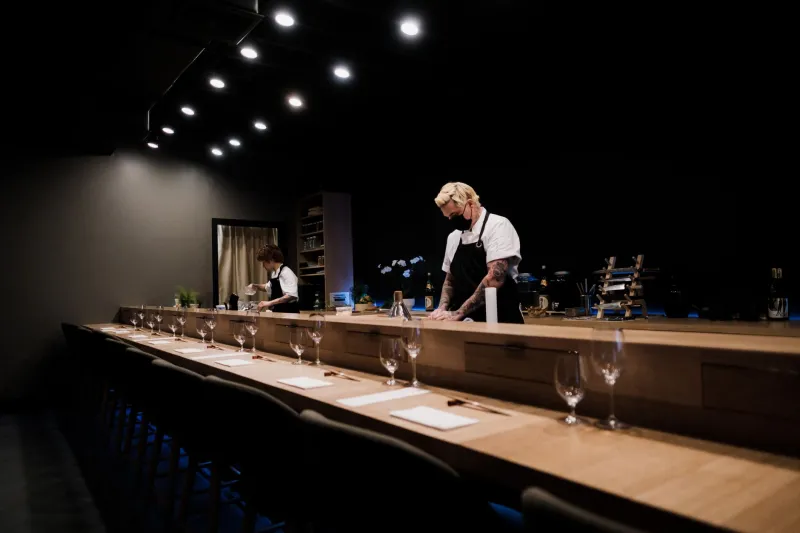
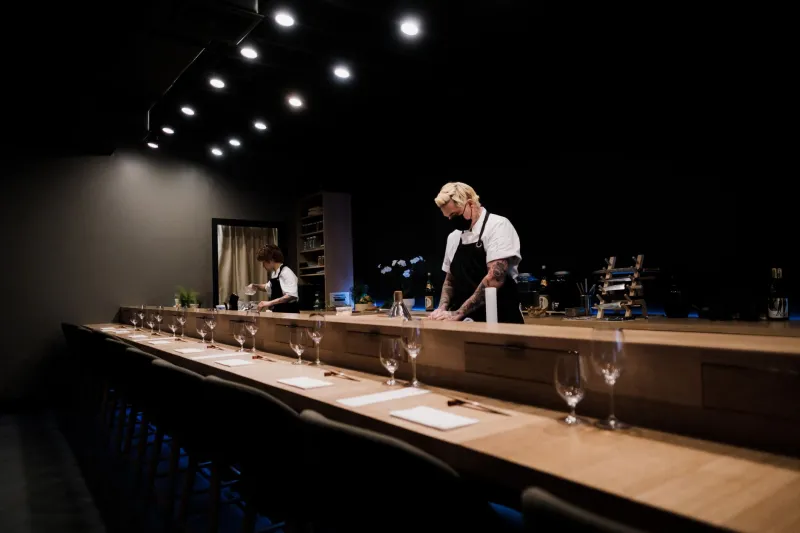
At Ikeda Osushi, the counter is designed around observation. The chef can see when a guest is ready for the next piece, when a pause is welcome, and when a conversation is invited. A solo guest often makes those signals easier to read because there is no table talk to compete with. The exchange can be subtle: a nod, a question about the fish, a moment of silence after a particularly good bite.
Chefs also understand that solo dining is not always solitary. Some guests want to talk. Others want to be left alone with the meal. The best service does not impose a mood. It responds to one. A party of one can be the most engaged guest at the counter or the most private. Both are legitimate, and both require a different kind of attention.
Reservation Policies in Transition
As solo omakase becomes more popular, reservation policies are adapting. Many counters have begun to hold or release single seats more intentionally. Some restaurants offer dedicated counter seats for solo diners. Others allow a single guest to book a seat that would otherwise be difficult to fill. The goal is not to privilege one kind of diner over another, but to recognize that a counter works best when it is full of people who want to be there.
The economics are part of the story. A single seat can be harder to sell than a pair, especially on busy evenings. But a solo diner who books in advance, arrives on time, and engages with the meal can be an ideal guest. They take up exactly the space reserved for them. They tend to move at the chef’s pace. They often leave with a deeper impression of the restaurant than a larger party might.
Reservation platforms have made the single seat more visible. A guest can see availability and book without making a phone call or explaining why they are dining alone. That small change in access has helped normalize the solo counter experience. It has also encouraged restaurants to think more carefully about how they present the single seat: not as leftover inventory, but as a legitimate way to experience the counter.
A First-Timer’s Guide to Dining Alone
For guests considering a solo omakase for the first time, a few practical points can make the experience more comfortable.
Book with intention. Choose a counter that suits your mood. If you want conversation, sit closer to the chef’s working area and ask questions when the moment allows. If you want quiet, choose a seat at the edge and let the meal unfold without commentary.
Arrive on time. The counter is a sequence, and the chef’s timing is part of the experience. A solo guest who arrives late can disrupt the rhythm for everyone, including themselves.
Ask when you are curious, but read the room. A question about the fish or the preparation is usually welcome. A long conversation during a busy service may not be. The best exchanges at the counter are brief, specific, and well timed.
Do not treat the phone as a companion. A photograph or a note is fine, but a solo meal is an opportunity to be present. The counter rewards attention. The more you watch, the more you notice.
Finally, do not apologize for dining alone. The single seat is not a lesser seat. It is one of the most direct ways to experience a chef’s work.
Hospitality for One
The rise of solo omakase is not only a story about diners. It is a story about hospitality. A great counter does not require a crowd to feel complete. It requires a sense of occasion, a clear rhythm, and a chef who can meet each guest at the right moment.
At Ikeda Osushi, the single chair is not an afterthought. It is part of the architecture of the meal. The guest who sits there has chosen to give the counter their full attention. The restaurant’s job is to return that attention with precision, warmth, and a meal that feels complete in itself. In that exchange, one seat can be the most coveted place in the house.