When a Name Carries the Weight of Every Plate
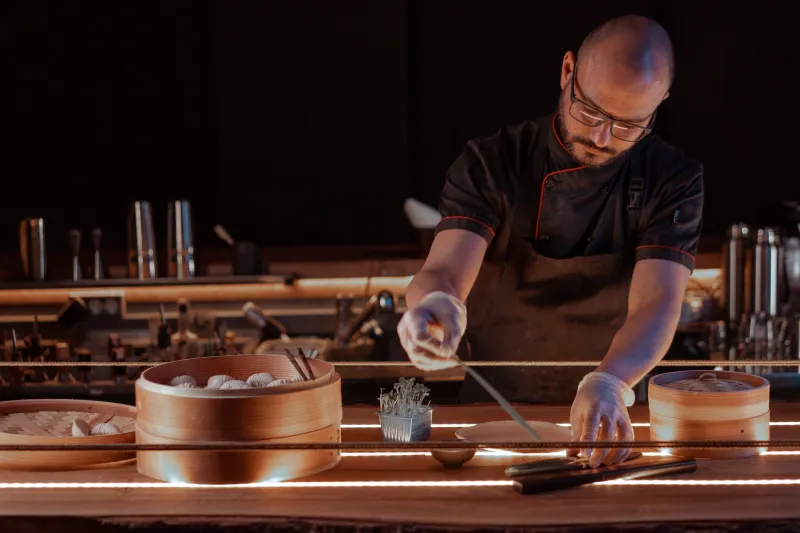
There is a particular kind of pressure that settles over a chef the moment his name is placed above the door. It is not the pressure of a deadline or a demanding critic. It is quieter than that, and far more permanent. It is the pressure of being, in every meaningful sense, the guarantee.
At Ikeda Osushi, that guarantee is not a marketing construct. It is the structural logic of the entire enterprise. When diners reserve a seat at the counter, they are not simply booking a meal — they are placing their trust in a specific individual's judgment, taste, and discipline. That trust, once extended, must be honored twelve courses at a time, evening after evening, without exception.
The Architecture of Accountability
Most restaurant brands are insulated from any single point of failure. A chef departs, a sous chef rises, and the institution continues. The name on the sign belongs to no one in particular, or to everyone in general. The eponymous sushi restaurant operates under an entirely different logic.
Chef Ikeda has spoken candidly about what it means to attach his identity to every plate that leaves the kitchen. "There is no distance," he has explained. "When something is wrong — when the rice temperature is slightly off, when a fish has not rested long enough — I feel it as a personal failure, not a systems failure." That absence of distance is precisely what makes the model so demanding, and so honest.
This accountability extends well beyond the visible moments of service. It governs the predawn hours when seafood deliveries arrive and must be assessed with the same rigor whether the chef slept four hours or eight. It governs the conversations with importers, the refusal of product that most diners would never recognize as substandard, and the willingness to remove a fish from the evening's menu rather than serve it at ninety percent of its potential.
Quality Control as Personal Expression
In a conventional kitchen, quality control is often systematized — checklists, temperature logs, standardized recipes that allow consistency to be achieved through process rather than judgment. At a counter like Ikeda Osushi, quality control is something more intimate. It is the daily exercise of a palate and a set of values that cannot be fully codified.
Consider the act of seasoning sushi rice. The ratio of vinegar to sugar to salt is documented, of course. But the final adjustment — the moment when the chef decides the balance is correct — is a sensory determination made by a single person whose understanding of "correct" has been shaped by years of training, by the specific fish that will accompany the rice that evening, and by an intuition that resists easy articulation. No checklist captures that.
This is why the personal brand in premium sushi is not vanity. It is accuracy. The name on the door is, in fact, the most precise description of what the diner is purchasing: access to one chef's fully developed sensibility, applied without compromise.
Freedom Within the Framework
The paradox of the eponymous restaurant is that the very accountability that creates pressure also creates freedom. When a chef's name is the brand, there is no committee to satisfy, no corporate flavor profile to maintain, no investor preference to accommodate. The decisions — about which fish to feature, which regional tradition to honor, which technique to refine — belong entirely to the person whose judgment is being sold.
Chef Ikeda has described this freedom as essential to the quality of the work. "If I am not the one deciding, then my name is not really on the door," he has observed. "It is just letters." The freedom to decline a supplier, to change the menu mid-week because a particular fish arrived in superior condition, to extend or shorten the sequence based on the evening's ingredients — these are not indulgences. They are the mechanisms through which the promise of the name is kept.
For American diners accustomed to the reliability of branded dining experiences, this model can feel unfamiliar. The menu at Ikeda Osushi is not the same every night. The sequence shifts. The fish changes. What remains constant is the standard applied to whatever appears, and the identity of the person applying it.
The Competitive Weight of Reputation
In a city where premium dining options multiply season by season, the eponymous sushi establishment occupies a specific and precarious position. Its reputation is entirely non-transferable. A single evening of compromised quality does not merely disappoint — it creates a small fracture in the covenant between the chef's name and the diner's trust.
This is why chefs like Ikeda tend to be, by temperament, constitutionally incapable of accepting "good enough." The competitive market creates external pressure, certainly. But the more exacting pressure comes from within — from the knowledge that the name above the door will outlast any individual evening, and that every plate contributes to or diminishes what that name eventually means.
In practice, this translates into decisions that are economically irrational by conventional standards: paying significantly more for a preferred supplier's product, absorbing the cost of discarded fish rather than serving it past its peak, maintaining a counter size that prioritizes the quality of attention over the volume of covers.
What the Diner Inherits
For the guest seated at the Ikeda Osushi counter, this architecture of accountability produces something that is difficult to quantify but immediately perceptible. It is the quality of being genuinely cared for — not in a performative hospitality sense, but in the sense that every element of the experience has been considered by someone for whom the outcome is deeply personal.
The fish on the plate was chosen by someone whose name is on the door. The rice was seasoned by that same person. The pacing of the meal, the temperature of the room, the moment when the chef makes eye contact and reads whether a diner is ready to proceed — all of it flows from a single source of responsibility.
That is what a name above the door actually means, when the name is taken seriously. It is not a brand identity. It is a standing promise, renewed with every course, that the person who made the commitment is still in the room, still paying attention, and still unwilling to let the standard slip.